Sensors in the Field: How IoT Is Transforming Agriculture
Series: The Future of Agriculture — Article 4 of 12
Introduction
In the previous article, we traced the evolution of agriculture from traditional farming to the emerging era of Agriculture 4.0. We saw how each era built on the last, and how the current transformation is driven by data, connectivity, and intelligence. Now it is time to examine the technologies that make this transformation possible.
We begin with the Internet of Things (IoT) and sensors. These devices are the eyes and ears of smart agriculture. They collect the raw data that feeds every other technology in the smart farming toolkit—from AI algorithms to autonomous machinery. Without accurate, timely data, precision agriculture is impossible. IoT sensors provide that data continuously, enabling farmers to monitor conditions in real time and respond quickly to changing circumstances.
This article explores what IoT sensors are, how they work, what they measure, and how they are being used in agriculture today. We will also discuss the challenges of deploying IoT in rural environments and the future potential of this foundational technology.
What Is the Internet of Things?
The Internet of Things refers to the network of physical devices—sensors, machines, and appliances—that are connected to the internet and can collect and exchange data. In agriculture, IoT devices range from simple soil moisture probes to complex weather stations and automated irrigation controllers. These devices communicate wirelessly with each other and with central platforms, where data is stored, processed, and analyzed.
The key feature of IoT is connectivity. A sensor that simply records data locally is not part of the IoT. It becomes an IoT device when it can transmit that data to a network, where it can be accessed and acted upon remotely. This connectivity enables real-time monitoring and control, which is essential for smart agriculture.
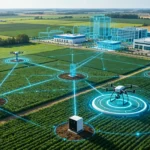
IoT systems typically consist of four layers. The perception layer includes the sensors and actuators that interact with the physical environment. The network layer includes the communication technologies that transmit data. The processing layer includes the platforms and algorithms that analyze data. The application layer includes the user interfaces and services that deliver insights and control to farmers. Understanding these layers helps explain how IoT works and where challenges may arise.
Types of Agricultural Sensors
Agricultural sensors can be grouped into several categories based on what they measure. Each type provides different information that is useful for different purposes.
Soil Sensors
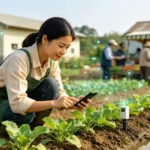
Soil sensors measure conditions below the surface, where roots grow and where many critical processes occur. Soil moisture sensors are among the most common and valuable. They measure the volumetric water content in soil, helping farmers decide when and how much to irrigate. Over-irrigation wastes water and can leach nutrients away from roots. Under-irrigation stresses plants and reduces yields. Soil moisture sensors enable precise irrigation scheduling.
Soil temperature sensors measure how warm or cool the soil is. Temperature affects seed germination, root growth, and microbial activity. It also influences the availability of nutrients to plants. Soil pH sensors measure acidity or alkalinity, which affects nutrient availability and crop health. Soil nutrient sensors, still developing, can measure nitrogen, phosphorus, and potassium levels. These sensors help farmers apply fertilizer only when and where it is needed, reducing costs and environmental impact.
Other soil sensors measure electrical conductivity, which indicates salinity and soil texture. Excessive salinity can damage crops and reduce yields. Soil compaction sensors measure density, which affects water infiltration and root penetration. Together, these sensors provide a comprehensive picture of soil health and fertility.
Weather and Climate Sensors
Weather sensors measure atmospheric conditions that affect crop growth and farm operations. Temperature and humidity sensors are fundamental. They help farmers predict disease risk, since many fungal and bacterial diseases thrive in warm, humid conditions. They also inform decisions about planting, spraying, and harvesting.
Rain gauges measure precipitation, helping farmers track water inputs and adjust irrigation accordingly. Wind sensors measure speed and direction, which is important for spraying operations. Spraying in high winds can cause drift, wasting chemicals and potentially damaging neighboring crops. Solar radiation sensors measure sunlight intensity, which drives photosynthesis and affects crop growth and water demand.
Advanced weather stations combine multiple sensors into a single unit. They may also include barometric pressure sensors, leaf wetness sensors, and soil temperature probes. These stations can provide localized weather data that is more accurate than regional forecasts, which may not reflect conditions on a specific farm.
Plant and Crop Sensors
Plant sensors measure the condition of the crops themselves. Optical sensors use light reflectance to assess plant health. Healthy plants reflect light differently than stressed plants, and these differences can be detected by sensors. Multispectral and hyperspectral sensors measure reflectance across multiple wavelengths, providing detailed information about chlorophyll content, water status, and nutrient levels.
Thermal sensors measure plant temperature, which indicates water stress. When plants lack water, they close their stomata to conserve moisture, which raises their temperature. Thermal imaging can detect this before visible symptoms appear. Fluorescence sensors measure chlorophyll fluorescence, which provides information about photosynthetic efficiency and stress.
Some plant sensors are attached directly to plants. Stem diameter sensors measure growth and water status. Sap flow sensors measure water movement through the plant. These sensors provide continuous, high-resolution data but are typically used in research or high-value crops rather than broad-acre farming.
Livestock Sensors
IoT sensors are also used in livestock farming. Ear tags and collars with accelerometers and GPS can track animal movement, activity, and location. Health sensors can monitor body temperature, heart rate, and rumination. These sensors help farmers detect illness early, improve breeding management, and optimize grazing. In poultry and dairy operations, sensors monitor environmental conditions and automate feeding and ventilation.
Water and Irrigation Sensors
Water sensors measure the quality and quantity of water used in irrigation. Flow meters measure water volume, helping farmers track usage and detect leaks. Pressure sensors monitor pipeline pressure, identifying blockages or failures. Water quality sensors measure pH, salinity, and nutrient levels, which affect crop health and soil conditions. These sensors are essential for efficient irrigation management, especially in water-scarce regions.
Communication Technologies
IoT sensors need to transmit data to be useful. Several communication technologies are available, each with different characteristics and trade-offs. Wi-Fi is common but has limited range and high power consumption. Bluetooth is low-power but short-range. Cellular networks (3G, 4G, 5G) provide wide coverage but can be expensive and may not reach rural areas.
Low-Power Wide-Area Networks (LPWAN) are particularly well-suited to agriculture. Technologies such as LoRaWAN and NB-IoT offer long-range communication with low power consumption, allowing sensors to operate for years on a single battery. They can penetrate dense vegetation and reach remote fields. These characteristics make LPWAN a popular choice for agricultural IoT deployments.
The choice of communication technology depends on the specific application. A soil moisture sensor in a small garden might use Wi-Fi. A weather station on a large farm might use LoRaWAN. A livestock tracker might use cellular networks. In practice, many farms use a combination of technologies to meet different needs.
Applications in Agriculture
IoT sensors are being used in a wide range of agricultural applications. One of the most common is precision irrigation. Soil moisture sensors and weather data are used to determine exactly when and how much to irrigate. Automated systems can then control valves and pumps, delivering water only where it is needed. This saves water, reduces energy costs, and improves crop health.
Another application is precision fertilization. Soil nutrient sensors and plant sensors guide the application of fertilizers. Variable-rate technology allows different amounts of fertilizer to be applied to different parts of a field. This reduces waste, saves money, and minimizes environmental pollution.
Pest and disease management is another important application. Weather sensors and plant sensors can detect conditions that favor pest outbreaks or disease development. Early warning systems can alert farmers, allowing them to take targeted action before problems spread. This reduces pesticide use and improves crop quality.
IoT sensors also support greenhouse and controlled-environment agriculture. Sensors monitor temperature, humidity, carbon dioxide, and light levels. Automated systems adjust ventilation, heating, lighting, and irrigation to maintain optimal growing conditions. This enables year-round production and higher yields.
In livestock farming, IoT sensors monitor animal health, behavior, and location. They can detect lameness, illness, and estrus, helping farmers improve animal welfare and productivity. Automated feeding and milking systems use sensor data to optimize operations.
Supply chain and storage applications are also growing. Sensors monitor temperature and humidity during transport and storage, ensuring that perishable products remain fresh. They can detect spoilage or contamination and trigger alerts. This reduces waste and improves food safety.
Challenges and Limitations
Despite their potential, IoT sensors face several challenges in agriculture. Cost is a major barrier. While sensor prices have fallen, deploying a large network of sensors can still be expensive, especially for smallholder farmers. The cost includes not only the sensors themselves but also communication infrastructure, data platforms, and maintenance.
Power supply is another challenge. Many sensors are deployed in remote fields without access to electricity. They rely on batteries, which must be replaced periodically. Solar-powered sensors can overcome this limitation, but they add cost and complexity. Energy harvesting technologies, which capture energy from sunlight, vibration, or temperature differences, are promising but not yet widely adopted.
Connectivity is a persistent issue in rural areas. Many farms lack reliable internet access, making it difficult to transmit data. LPWAN technologies help, but coverage is still incomplete in many regions. Without connectivity, IoT sensors cannot deliver their full value.
Data management is another challenge. A large farm may generate millions of data points every day. Storing, processing, and analyzing this data requires robust infrastructure and expertise. Farmers may lack the skills or resources to manage complex data systems. User-friendly platforms and advisory services are needed to bridge this gap.
Sensor accuracy and calibration are also important. Sensors can drift over time, producing inaccurate readings. Regular calibration and maintenance are necessary to ensure data quality. In harsh agricultural environments, sensors may be damaged by weather, animals, or machinery. Ruggedized designs and protective enclosures help but add cost.
Finally, interoperability is a challenge. Sensors and platforms from different vendors may not work together, making it difficult to integrate multiple technologies. Standards are emerging, but widespread adoption is still limited. Farmers may find themselves locked into proprietary systems, limiting their flexibility and bargaining power.
The Future of Agricultural IoT
The future of agricultural IoT is promising. Sensors are becoming smaller, cheaper, and more capable. New sensing technologies, such as nanoscale sensors and biosensors, may enable new applications. Energy harvesting and battery technology are improving, extending sensor lifetimes. Communication networks are expanding, bringing connectivity to more rural areas.
Artificial intelligence is enhancing the value of IoT data. AI algorithms can analyze sensor data to predict crop yields, detect diseases, and recommend actions. They can also automate decision-making, reducing the burden on farmers. Edge computing, which processes data locally rather than in the cloud, is reducing latency and bandwidth requirements.
Integration with other technologies is also advancing. IoT sensors are being combined with drones, satellites, and robots to create comprehensive smart farming systems. Data from multiple sources is fused to provide a more complete picture of farm conditions. This integration is essential for the autonomous farms of the future.
Perhaps most importantly, IoT is becoming more accessible to smallholder farmers. Low-cost sensors, mobile phone-based platforms, and shared infrastructure are lowering barriers to entry. In developing countries, IoT is being used to provide weather forecasts, market prices, and agronomic advice to farmers who previously had limited access to information. This has the potential to improve livelihoods and food security on a large scale.
Conclusion
IoT sensors are the foundation of smart agriculture. They collect the data that drives precision irrigation, fertilization, pest management, and countless other applications. They enable farmers to monitor conditions in real time, respond quickly to changes, and make better decisions. While challenges remain, including cost, connectivity, power, and data management, the trajectory is clear. Sensors are becoming more capable, more affordable, and more integrated into farming systems.
In the next article in this series, we will explore another critical source of agricultural data: drones and satellites. These technologies provide a bird’s-eye view of farms, complementing the ground-level data from IoT sensors. Together, they form the foundation of the “air-ground integrated” data systems that are transforming agriculture.
Next in the series: “Eyes in the Sky: Drones and Satellite Remote Sensing in Agriculture”