Robots in the Fields: Automation and the Rise of Autonomous Farming
Series: The Future of Agriculture — Article 6 of 12
Introduction
In the previous article, we examined artificial intelligence—the brain of smart agriculture. AI analyzes data, makes predictions, and supports decisions. But intelligence alone does not get work done. Someone, or something, must act on those decisions. This is where robotics and automation come in.
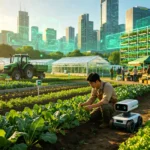
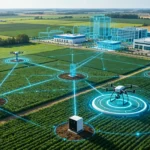
Robots are the hands of smart agriculture. They plant seeds, pull weeds, spray pesticides, harvest crops, and sort produce. They operate with precision, consistency, and endurance that humans cannot match. They work in harsh conditions, around the clock, without fatigue. And increasingly, they operate autonomously, guided by AI and informed by data from sensors, drones, and satellites.
This article explores the role of robotics and automation in agriculture. We will examine the key technologies, their applications, the benefits they deliver, and the challenges they face. We will also consider what the rise of autonomous farming means for farmers, workers, and rural communities.
Why Agriculture Needs Robots
The case for agricultural robotics is compelling. First, labor shortages are becoming severe in many parts of the world. In developed countries, farmers are aging, and young people are reluctant to take up physically demanding, seasonal work. In regions that rely on migrant labor, political and economic factors can disrupt supply. Robots offer a way to fill the gap.
Second, labor costs are rising. Minimum wages are increasing, and competition for workers is intensifying. Robots can reduce dependence on human labor, lowering costs and improving predictability. While robots require capital investment, their operating costs are often lower than human labor over the long term.
Third, robots improve precision and consistency. Humans get tired, distracted, and inconsistent. Robots perform tasks the same way every time, with sub-centimeter accuracy. This improves quality, reduces waste, and increases yields. In tasks such as thinning, pruning, and harvesting, precision is critical.
Fourth, robots can work in conditions that are unsafe or uncomfortable for humans. They can operate in extreme heat, cold, or humidity. They can spray chemicals without exposing workers to toxins. They can lift heavy loads without risking injury. This improves safety and working conditions.
Finally, robots are essential for the autonomous farms of the future. If farms are to operate with minimal human intervention, robots must handle planting, maintenance, and harvesting. AI provides the intelligence; robotics provides the action. Together, they enable a new level of efficiency and scalability.
Key Robotics Technologies
Agricultural robots rely on several core technologies. Understanding these technologies helps explain what robots can do and where their limitations lie.
Navigation and Positioning
Robots must know where they are and where they are going. GPS and RTK (Real-Time Kinematic) positioning provide centimeter-level accuracy, enabling robots to navigate fields precisely. In orchards and greenhouses, where GPS signals may be weak, robots use LiDAR, cameras, and inertial sensors to build maps and localize themselves.
Path planning algorithms determine the most efficient route through a field, avoiding obstacles and minimizing overlap. Simultaneous localization and mapping (SLAM) allows robots to build maps of unknown environments and navigate within them. These technologies are essential for autonomous operation.
Perception and Computer Vision
Robots must perceive their environment to act intelligently. Cameras, LiDAR, and other sensors capture data about crops, soil, obstacles, and other objects. Computer vision algorithms interpret this data, identifying plants, weeds, fruits, and pests. This enables robots to make decisions—which plant to pick, which weed to remove, which area to spray.
Deep learning has dramatically improved computer vision in recent years. Robots can now distinguish between crops and weeds with high accuracy, even in complex, cluttered environments. They can identify ripe fruits and vegetables, assess quality, and detect diseases. These capabilities are essential for selective harvesting and precision spraying.
Manipulation and End Effectors
Robots must physically interact with the environment. Manipulators—robotic arms—and end effectors—grippers, cutters, and sprayers—perform tasks such as picking, pruning, and planting. Designing effective end effectors is one of the hardest challenges in agricultural robotics. Fruits and vegetables are delicate and variable in shape, size, and firmness. Grippers must be gentle enough to avoid damage but firm enough to hold securely.
Different crops require different end effectors. A strawberry harvester needs a soft gripper that can detach the fruit without crushing it. A lettuce harvester needs a cutter that can sever the stem cleanly. A weeding robot needs a tool that can remove weeds without disturbing crops. Researchers are developing specialized end effectors for each application, as well as versatile grippers that can handle multiple crops.
Power and Energy
Robots need power to operate. Most agricultural robots run on batteries, which limits their operating time and range. Battery technology is improving, but energy density remains a constraint. Some robots use solar panels to extend their range. Others use hybrid systems or quick-swap batteries. In the future, hydrogen fuel cells and other technologies may provide longer operating times.
Autonomy and Control
Robots can operate at different levels of autonomy. Remote-controlled robots require a human operator. Semi-autonomous robots perform some tasks independently but require human oversight. Fully autonomous robots operate without human intervention, making decisions and taking actions on their own.
Most agricultural robots today are semi-autonomous. They perform specific tasks under human supervision. Fully autonomous robots are emerging, but they remain rare, especially in complex, unpredictable field environments. As AI and sensor technology improve, autonomy will increase.
Applications of Agricultural Robotics
Agricultural robots are being developed and deployed for a wide range of tasks. The following sections describe some of the most important applications.
Autonomous Tractors and Field Machinery
Autonomous tractors are among the most mature agricultural robots. They use GPS and sensors to navigate fields, plow, plant, and spray without a human driver. Farmers can monitor them remotely and intervene if needed. Autonomous tractors increase efficiency, reduce labor costs, and enable precise operations.
Other autonomous field machinery includes seeders, sprayers, and harvesters. These machines can operate in fleets, coordinated by central software. They can work day and night, in favorable weather, to complete tasks quickly. This is especially valuable during planting and harvest, when timing is critical.
Weeding Robots
Weeding is one of the most labor-intensive and chemical-intensive tasks in agriculture. Weeding robots offer a solution. Using computer vision, they distinguish between crops and weeds and remove weeds mechanically or with targeted herbicides. This reduces herbicide use, lowers costs, and improves sustainability.
Several companies have developed commercial weeding robots. Some use blades or tines to uproot weeds. Others use lasers or microwaves to kill weeds without disturbing the soil. These robots can operate autonomously, covering fields repeatedly to keep weeds under control.
Harvesting Robots
Harvesting is another labor-intensive task, especially for fruits and vegetables. Harvesting robots use computer vision to identify ripe produce and robotic arms to pick it. They can work continuously, reducing dependence on seasonal labor.
Strawberry harvesters, apple pickers, and tomato harvesters are among the most advanced. They use soft grippers and sophisticated vision systems to avoid damaging delicate fruit. While still less efficient than human pickers in some cases, they are improving rapidly. In greenhouses and controlled environments, where conditions are more predictable, harvesting robots are already commercially viable.
Seeding and Planting Robots
Seeding and planting robots place seeds or seedlings with precision. They can plant at optimal depth and spacing, improving germination and growth. Some robots plant individual seedlings, while others use seed drills or transplanters. Precision planting reduces seed waste and improves yields.
Sorting and Grading Robots
After harvest, produce must be sorted and graded by size, shape, color, and quality. Sorting robots use computer vision to inspect each item and robotic arms to divert it to the correct bin. They work faster and more consistently than humans, improving efficiency and reducing errors.
Sorting robots are widely used in packing houses for fruits, vegetables, and nuts. They can detect defects that humans might miss, ensuring consistent quality. They can also collect data on each item, supporting traceability and quality control.
Greenhouse and Vertical Farm Robots
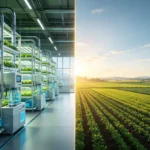
Greenhouses and vertical farms are ideal environments for robots. Conditions are controlled, layouts are structured, and tasks are repetitive. Robots can plant, monitor, pollinate, and harvest crops with high precision. In vertical farms, robots move trays and monitor plants on multiple levels.
These controlled-environment systems enable year-round production with minimal labor. They are particularly suitable for leafy greens, herbs, and berries. As technology improves and costs fall, they are expanding to more crops and more locations.
Livestock and Dairy Robots
Robotics is also transforming livestock and dairy farming. Automatic milking systems allow cows to be milked without human intervention. Robots clean barns, feed animals, and monitor health. Drones and ground robots monitor pastures and move herds. These technologies improve animal welfare, reduce labor, and increase productivity.
Benefits of Agricultural Robotics
Agricultural robotics delivers several benefits. It reduces labor costs and addresses labor shortages. It improves precision and consistency, increasing yields and quality. It reduces chemical use, improving sustainability and safety. It enables round-the-clock operation, increasing efficiency. And it supports data collection, feeding AI systems that further optimize farming.
Robots also improve working conditions. They take on dangerous, dirty, and repetitive tasks, reducing injury and fatigue. They allow farmers to focus on management and strategy rather than manual labor. This can make farming more attractive to younger generations.
Challenges and Limitations
Despite their potential, agricultural robots face significant challenges. Cost is the most obvious. Robots are expensive to develop, manufacture, and maintain. While prices are falling, they remain out of reach for many farmers, especially smallholders. Shared ownership, leasing, and cooperative models can help, but adoption is still limited.
Technical challenges remain. Agricultural environments are complex, unstructured, and unpredictable. Plants vary in size and shape. Weather changes. Obstacles appear. Robots must be robust enough to handle these conditions. This is difficult and expensive. Many robots work well in controlled environments but struggle in open fields.
Speed is another limitation. Many agricultural robots are slower than human workers, especially for delicate tasks like harvesting. They may not be able to cover enough area or process enough produce to be economically viable. Improving speed without sacrificing accuracy is a key research goal.
Reliability is also critical. Robots must operate consistently, season after season, with minimal downtime. Breakdowns during harvest can be disastrous. Robust design, predictive maintenance, and remote support are essential.
Regulation and liability are emerging issues. Who is responsible if an autonomous tractor causes damage or injury? How should robots be certified and insured? These questions are not fully resolved, and regulatory frameworks are still developing.
Finally, there are social and economic concerns. Robots may displace farm workers, particularly those in seasonal and manual roles. While they may create new jobs in engineering, maintenance, and data management, these jobs require different skills. Transition programs and training are needed to ensure that workers are not left behind.
The Future of Autonomous Farming
The future of agricultural robotics is closely tied to the future of autonomous farming. In the coming decades, we can expect to see farms that operate with minimal human intervention. Fleets of robots will plant, monitor, and harvest crops. Autonomous tractors will prepare fields and apply inputs. Drones will scout for problems. AI will coordinate everything, optimizing operations in real time.
This vision is not science fiction. Elements of it are already in place. Fully autonomous farms exist for certain crops in controlled environments. In open fields, autonomy is increasing incrementally. As technology improves and costs fall, adoption will accelerate.
However, the transition will not be uniform. Large farms with capital and technical expertise will adopt robots first. Smallholders may benefit through shared platforms, cooperatives, and service models. Developing countries may leapfrog to advanced technologies, skipping older systems. The path will vary by region, crop, and farm type.
What is clear is that robotics will play an increasingly important role in agriculture. It will not replace farmers entirely. Farming involves judgment, adaptability, and local knowledge that robots cannot easily replicate. But it will augment human capabilities, making farming more productive, sustainable, and resilient.
Conclusion
Robotics and automation are transforming agriculture. Robots plant, weed, spray, harvest, and sort with precision and consistency. They address labor shortages, reduce costs, and improve sustainability. They work in conditions that are unsafe or uncomfortable for humans. And they are essential for the autonomous farms of the future.
While challenges remain, including cost, speed, reliability, and social impact, the trajectory is clear. Robotics is becoming more capable, more affordable, and more integrated with other smart agriculture technologies. In the next article in this series, we will turn to a different kind of technology: blockchain and digital traceability. These tools connect farms to consumers, ensuring transparency, safety, and trust throughout the food supply chain.
Next in the series: “From Farm to Fork: Blockchain and Digital Traceability in Agriculture”