Author Archives: nongyongji

From Farm to Fork: Blockchain and Digital Traceability in Agriculture

Series: The Future of Agriculture — Article 7 of 12

Introduction

In the previous articles in this series, we focused on the production side of agriculture. We explored how sensors, drones, AI, and robots are transforming the way food is grown. But farming does not end at the farm gate. Food must be processed, packaged, transported, stored, and sold before it reaches consumers. This journey—often called the food supply chain—is long, complex, and increasingly global.

Complexity brings risks. Food can be contaminated, adulterated, or mislabeled. Products can be recalled, causing financial losses and reputational damage. Consumers, meanwhile, are demanding more information about where their food comes from and how it was produced. They want assurance that it is safe, sustainable, and ethically sourced.

This is where blockchain and digital traceability come in. These technologies create a transparent, tamper-resistant record of a product’s journey from farm to fork. They enable rapid recalls, reduce fraud, and build trust between producers and consumers. In this article, we explore what blockchain is, how it works in agriculture, what it can achieve, and what challenges remain.

What Is Blockchain?

Blockchain is a distributed ledger technology. A ledger is simply a record of transactions. In traditional systems, a central authority—a bank, a government, or a company—maintains the ledger and controls access. In a blockchain, the ledger is distributed across many computers, called nodes. Each node has a copy of the ledger, and all copies must agree on the record.

Transactions are grouped into blocks. Each block contains a set of transactions, a timestamp, and a cryptographic hash of the previous block. This linking of blocks creates a chain—hence the name blockchain. Because each block references the previous one, altering any block would require changing all subsequent blocks, which is computationally infeasible. This makes blockchain highly resistant to tampering.

Blockchain can be public or private. Public blockchains, like Bitcoin and Ethereum, are open to anyone. Private blockchains are restricted to authorized participants. In agriculture, private or consortium blockchains are more common, because supply chain data is often commercially sensitive and participants must be identified and trusted.

Smart contracts are another important feature. A smart contract is a self-executing program stored on the blockchain. It automatically enforces the terms of an agreement when predefined conditions are met. In agriculture, smart contracts can automate payments, release shipments, or trigger recalls based on verified data.

Why Agriculture Needs Traceability

Traceability is the ability to track a product through every stage of the supply chain. It answers questions such as: Where was this food grown? Which farm produced it? When was it harvested? How was it processed? Who transported it? Where has it been stored?

Traceability is important for several reasons. First, food safety. When contamination occurs, traceability enables rapid identification of the source and scope of the problem. Affected products can be recalled quickly, reducing harm to consumers and limiting financial losses. Without traceability, recalls are slower, broader, and more costly.

Second, quality assurance. Traceability allows producers and retailers to verify that products meet quality standards. It can confirm that a product is organic, non-GMO, or sustainably produced. It can verify that cold chain requirements were maintained during transport. This protects brand reputation and supports premium pricing.

Third, fraud prevention. Food fraud—the deliberate mislabeling or adulteration of food—is a significant problem. Examples include substituting cheaper ingredients, misrepresenting origin, or falsifying organic certification. Traceability makes fraud harder and easier to detect. Blockchain, in particular, makes records tamper-resistant, providing strong evidence of authenticity.

Fourth, consumer trust. Consumers increasingly want to know about their food. They want transparency about farming practices, environmental impact, and labor conditions. Traceability platforms allow consumers to scan a QR code and see a product’s history. This builds trust and can command higher prices.

Fifth, regulatory compliance. Governments around the world are tightening food safety regulations. In the United States, the Food Safety Modernization Act (FSMA) includes traceability requirements. In the European Union, regulations require origin labeling for many products. Blockchain-based traceability can help companies comply efficiently and demonstrate compliance to regulators.

How Blockchain Enables Traceability

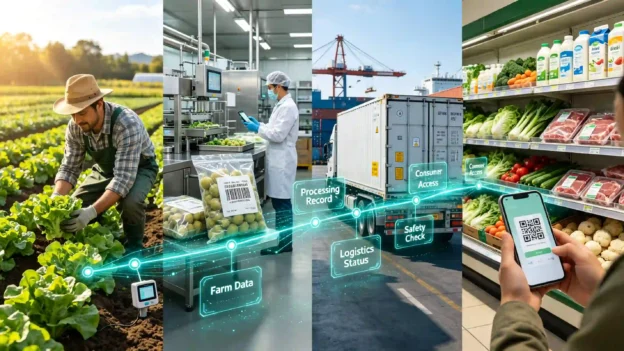
Blockchain enables traceability by creating a shared, immutable record of a product’s journey. Each participant in the supply chain—farmer, processor, transporter, distributor, retailer—records relevant events on the blockchain. These records are verified, timestamped, and linked to the product.

For example, a farmer might record the planting date, seed variety, and farming practices. A processor might record the processing date, methods, and quality checks. A transporter might record pickup and delivery times, temperatures, and locations. A retailer might record receipt and sale. Each event is added to the blockchain and cannot be altered later.

Consumers can access this record through a QR code or app. They can see where the product came from, how it was produced, and how it was handled. This transparency differentiates products and builds loyalty. It also enables rapid recalls: if a problem is detected, the blockchain can identify exactly which products are affected and where they are.

IoT sensors play a crucial role in this process. Sensors can automatically record data such as temperature, humidity, and location. This data is fed into the blockchain, reducing manual entry and the potential for errors or fraud. Automated recording ensures that the record reflects actual conditions, not just claimed conditions.

AI can also enhance blockchain traceability. AI algorithms can analyze supply chain data to detect anomalies, predict risks, and optimize logistics. They can flag suspicious patterns that might indicate fraud or contamination. Combined with blockchain’s tamper-resistant records, AI provides powerful tools for supply chain integrity.

Applications in Agriculture

Blockchain and digital traceability are being applied across a wide range of agricultural products. The following sections describe some of the most important applications.

Produce and Fresh Food

Fresh produce is highly perishable and vulnerable to contamination. Traceability is essential for food safety and quality. Blockchain platforms are being used to track fruits, vegetables, and herbs from farm to retailer. Consumers can scan a code and see the farm, harvest date, and transport conditions.

Major retailers and food companies have piloted blockchain traceability for produce. These pilots have demonstrated faster recalls, improved supply chain visibility, and increased consumer engagement. As costs fall and standards emerge, adoption is expected to grow.

Meat and Seafood

Meat and seafood supply chains are complex and prone to fraud. Mislabeling of species, origin, and production methods is common. Blockchain traceability can verify the species, origin, and handling of meat and seafood products. It can confirm that fish were caught legally and sustainably. It can track animals from birth to slaughter, ensuring welfare and health standards.

Several companies now offer blockchain-based traceability for seafood, allowing consumers to verify that their fish was caught in a specific region by a specific vessel. This supports sustainable fishing and helps combat illegal, unreported, and unregulated (IUU) fishing.

Coffee, Tea, and Cocoa

Coffee, tea, and cocoa are global commodities with long, complex supply chains. Smallholder farmers often receive a small share of the final price, and sustainability and labor issues are widespread. Blockchain traceability can connect consumers directly to farmers, verifying origin, farming practices, and fair trade claims.

Several initiatives use blockchain to track coffee from farm to cup. Consumers can scan a code and see the farm, farmer, harvest date, and processing method. This transparency supports premium pricing and improves farmer livelihoods. Similar initiatives exist for tea and cocoa.

Grains and Commodities

Grains such as wheat, rice, and corn are traded in large volumes and often blended from multiple sources. Traceability is challenging but valuable. Blockchain can track grain from farm to elevator to processor, verifying quality, origin, and sustainability claims. It can also support commodity trading and financing, reducing risk and improving efficiency.

Organic and Specialty Products

Organic, non-GMO, and specialty products command premium prices. Fraud and mislabeling are significant risks. Blockchain traceability can verify certification and production methods, protecting consumers and honest producers. It can also support carbon farming and other sustainability claims, as discussed in a later article.

Benefits of Blockchain Traceability

Blockchain traceability delivers several benefits. It improves food safety by enabling rapid recalls and reducing the scope of contamination incidents. It reduces fraud by making records tamper-resistant and verifiable. It builds consumer trust by providing transparency and provenance. It supports premium pricing by differentiating products. It improves supply chain efficiency by providing shared, real-time visibility. And it helps companies comply with regulations and demonstrate sustainability.

For farmers, blockchain traceability can open new markets and increase income. By connecting directly with consumers, farmers can capture more value and tell their story. By verifying sustainable practices, they can access sustainability-linked financing and carbon markets. By participating in traceability programs, they can strengthen relationships with buyers and reduce risk.

Challenges and Limitations

Despite its potential, blockchain traceability faces significant challenges. Cost is a major barrier. Implementing blockchain systems requires investment in technology, integration, and training. For smallholders and small businesses, these costs can be prohibitive. Shared platforms and low-cost solutions are needed to broaden access.

Standards and interoperability are also challenges. There are many blockchain platforms, and they do not always work together. Data formats and protocols vary. This fragmentation limits the value of traceability and makes it difficult to track products across multiple systems. Industry standards and interoperability protocols are essential.

Data quality is another concern. Blockchain ensures that recorded data cannot be altered, but it cannot guarantee that the data was accurate in the first place. If a farmer or processor enters false information, the blockchain will record it faithfully. This is sometimes called the “garbage in, garbage out” problem. IoT sensors and automated data collection can reduce this risk by minimizing human entry.

Scalability is a technical challenge. Public blockchains can be slow and expensive when processing many transactions. Private and consortium blockchains can be faster, but they sacrifice some of the decentralization and trust benefits. New consensus mechanisms and layer-two solutions are addressing these issues, but challenges remain.

Privacy and confidentiality are also concerns. Supply chain data can be commercially sensitive. Participants may not want to share all data with all other participants. Permissioned blockchains and zero-knowledge proofs allow selective disclosure, but these solutions add complexity.

Finally, adoption requires collaboration. Blockchain traceability only works if all participants in the supply chain participate. This requires coordination, trust, and shared incentives. In fragmented supply chains, achieving this collaboration can be difficult. Leadership from large buyers and retailers can help drive adoption.

The Future of Blockchain in Agriculture

The future of blockchain in agriculture is promising. As technology matures and costs fall, adoption is expected to grow. Integration with IoT, AI, and other smart agriculture technologies will enhance the value of traceability. Automated data collection will improve data quality. AI will detect anomalies and predict risks. Smart contracts will automate transactions and enforce agreements.

Regulation will also shape the future. Governments are increasingly requiring traceability for food safety and sustainability. Blockchain can help companies comply efficiently. Digital product passports, which provide comprehensive information about a product’s origin and impact, are being developed in the EU and elsewhere. Blockchain is a natural fit for these initiatives.

Consumer demand will continue to drive adoption. People want to know where their food comes from and how it was produced. They are willing to pay more for products they trust. Blockchain traceability meets this demand and creates new opportunities for producers who embrace transparency.

Perhaps most importantly, blockchain can help make supply chains more equitable. By connecting farmers directly to consumers and verifying sustainable practices, it can increase farmer incomes and support rural development. It can also reduce waste and improve efficiency, benefiting everyone in the supply chain.

Conclusion

Blockchain and digital traceability are transforming the food supply chain. They create transparent, tamper-resistant records of a product’s journey from farm to fork. They improve food safety, reduce fraud, build consumer trust, and support premium pricing. They help companies comply with regulations and demonstrate sustainability.

While challenges remain, including cost, standards, data quality, and collaboration, the trajectory is clear. Blockchain traceability is becoming more accessible, more integrated, and more valuable. In the next article in this series, we will explore vertical farming and controlled-environment agriculture—a different kind of transformation that is reshaping where and how food is grown.

Next in the series: “Vertical Farming and Plant Factories: The Urban Agriculture Revolution”
 

Robots in the Fields: Automation and the Rise of Autonomous Farming

Series: The Future of Agriculture — Article 6 of 12


Introduction

In the previous article, we examined artificial intelligence—the brain of smart agriculture. AI analyzes data, makes predictions, and supports decisions. But intelligence alone does not get work done. Someone, or something, must act on those decisions. This is where robotics and automation come in.

Robots are the hands of smart agriculture. They plant seeds, pull weeds, spray pesticides, harvest crops, and sort produce. They operate with precision, consistency, and endurance that humans cannot match. They work in harsh conditions, around the clock, without fatigue. And increasingly, they operate autonomously, guided by AI and informed by data from sensors, drones, and satellites.

This article explores the role of robotics and automation in agriculture. We will examine the key technologies, their applications, the benefits they deliver, and the challenges they face. We will also consider what the rise of autonomous farming means for farmers, workers, and rural communities.

Why Agriculture Needs Robots

The case for agricultural robotics is compelling. First, labor shortages are becoming severe in many parts of the world. In developed countries, farmers are aging, and young people are reluctant to take up physically demanding, seasonal work. In regions that rely on migrant labor, political and economic factors can disrupt supply. Robots offer a way to fill the gap.

Second, labor costs are rising. Minimum wages are increasing, and competition for workers is intensifying. Robots can reduce dependence on human labor, lowering costs and improving predictability. While robots require capital investment, their operating costs are often lower than human labor over the long term.

Third, robots improve precision and consistency. Humans get tired, distracted, and inconsistent. Robots perform tasks the same way every time, with sub-centimeter accuracy. This improves quality, reduces waste, and increases yields. In tasks such as thinning, pruning, and harvesting, precision is critical.

Fourth, robots can work in conditions that are unsafe or uncomfortable for humans. They can operate in extreme heat, cold, or humidity. They can spray chemicals without exposing workers to toxins. They can lift heavy loads without risking injury. This improves safety and working conditions.

Finally, robots are essential for the autonomous farms of the future. If farms are to operate with minimal human intervention, robots must handle planting, maintenance, and harvesting. AI provides the intelligence; robotics provides the action. Together, they enable a new level of efficiency and scalability.

Key Robotics Technologies

Agricultural robots rely on several core technologies. Understanding these technologies helps explain what robots can do and where their limitations lie.

Navigation and Positioning

Robots must know where they are and where they are going. GPS and RTK (Real-Time Kinematic) positioning provide centimeter-level accuracy, enabling robots to navigate fields precisely. In orchards and greenhouses, where GPS signals may be weak, robots use LiDAR, cameras, and inertial sensors to build maps and localize themselves.

Path planning algorithms determine the most efficient route through a field, avoiding obstacles and minimizing overlap. Simultaneous localization and mapping (SLAM) allows robots to build maps of unknown environments and navigate within them. These technologies are essential for autonomous operation.

Perception and Computer Vision

Robots must perceive their environment to act intelligently. Cameras, LiDAR, and other sensors capture data about crops, soil, obstacles, and other objects. Computer vision algorithms interpret this data, identifying plants, weeds, fruits, and pests. This enables robots to make decisions—which plant to pick, which weed to remove, which area to spray.

Deep learning has dramatically improved computer vision in recent years. Robots can now distinguish between crops and weeds with high accuracy, even in complex, cluttered environments. They can identify ripe fruits and vegetables, assess quality, and detect diseases. These capabilities are essential for selective harvesting and precision spraying.

Manipulation and End Effectors

Robots must physically interact with the environment. Manipulators—robotic arms—and end effectors—grippers, cutters, and sprayers—perform tasks such as picking, pruning, and planting. Designing effective end effectors is one of the hardest challenges in agricultural robotics. Fruits and vegetables are delicate and variable in shape, size, and firmness. Grippers must be gentle enough to avoid damage but firm enough to hold securely.

Different crops require different end effectors. A strawberry harvester needs a soft gripper that can detach the fruit without crushing it. A lettuce harvester needs a cutter that can sever the stem cleanly. A weeding robot needs a tool that can remove weeds without disturbing crops. Researchers are developing specialized end effectors for each application, as well as versatile grippers that can handle multiple crops.

Power and Energy

Robots need power to operate. Most agricultural robots run on batteries, which limits their operating time and range. Battery technology is improving, but energy density remains a constraint. Some robots use solar panels to extend their range. Others use hybrid systems or quick-swap batteries. In the future, hydrogen fuel cells and other technologies may provide longer operating times.

Autonomy and Control

Robots can operate at different levels of autonomy. Remote-controlled robots require a human operator. Semi-autonomous robots perform some tasks independently but require human oversight. Fully autonomous robots operate without human intervention, making decisions and taking actions on their own.

Most agricultural robots today are semi-autonomous. They perform specific tasks under human supervision. Fully autonomous robots are emerging, but they remain rare, especially in complex, unpredictable field environments. As AI and sensor technology improve, autonomy will increase.

Applications of Agricultural Robotics

Agricultural robots are being developed and deployed for a wide range of tasks. The following sections describe some of the most important applications.

Autonomous Tractors and Field Machinery

Autonomous tractors are among the most mature agricultural robots. They use GPS and sensors to navigate fields, plow, plant, and spray without a human driver. Farmers can monitor them remotely and intervene if needed. Autonomous tractors increase efficiency, reduce labor costs, and enable precise operations.

Other autonomous field machinery includes seeders, sprayers, and harvesters. These machines can operate in fleets, coordinated by central software. They can work day and night, in favorable weather, to complete tasks quickly. This is especially valuable during planting and harvest, when timing is critical.

Weeding Robots

Weeding is one of the most labor-intensive and chemical-intensive tasks in agriculture. Weeding robots offer a solution. Using computer vision, they distinguish between crops and weeds and remove weeds mechanically or with targeted herbicides. This reduces herbicide use, lowers costs, and improves sustainability.

Several companies have developed commercial weeding robots. Some use blades or tines to uproot weeds. Others use lasers or microwaves to kill weeds without disturbing the soil. These robots can operate autonomously, covering fields repeatedly to keep weeds under control.

Harvesting Robots

Harvesting is another labor-intensive task, especially for fruits and vegetables. Harvesting robots use computer vision to identify ripe produce and robotic arms to pick it. They can work continuously, reducing dependence on seasonal labor.

Strawberry harvesters, apple pickers, and tomato harvesters are among the most advanced. They use soft grippers and sophisticated vision systems to avoid damaging delicate fruit. While still less efficient than human pickers in some cases, they are improving rapidly. In greenhouses and controlled environments, where conditions are more predictable, harvesting robots are already commercially viable.

Seeding and Planting Robots

Seeding and planting robots place seeds or seedlings with precision. They can plant at optimal depth and spacing, improving germination and growth. Some robots plant individual seedlings, while others use seed drills or transplanters. Precision planting reduces seed waste and improves yields.

Sorting and Grading Robots

After harvest, produce must be sorted and graded by size, shape, color, and quality. Sorting robots use computer vision to inspect each item and robotic arms to divert it to the correct bin. They work faster and more consistently than humans, improving efficiency and reducing errors.

Sorting robots are widely used in packing houses for fruits, vegetables, and nuts. They can detect defects that humans might miss, ensuring consistent quality. They can also collect data on each item, supporting traceability and quality control.

Greenhouse and Vertical Farm Robots

Greenhouses and vertical farms are ideal environments for robots. Conditions are controlled, layouts are structured, and tasks are repetitive. Robots can plant, monitor, pollinate, and harvest crops with high precision. In vertical farms, robots move trays and monitor plants on multiple levels.

These controlled-environment systems enable year-round production with minimal labor. They are particularly suitable for leafy greens, herbs, and berries. As technology improves and costs fall, they are expanding to more crops and more locations.

Livestock and Dairy Robots

Robotics is also transforming livestock and dairy farming. Automatic milking systems allow cows to be milked without human intervention. Robots clean barns, feed animals, and monitor health. Drones and ground robots monitor pastures and move herds. These technologies improve animal welfare, reduce labor, and increase productivity.

Benefits of Agricultural Robotics

Agricultural robotics delivers several benefits. It reduces labor costs and addresses labor shortages. It improves precision and consistency, increasing yields and quality. It reduces chemical use, improving sustainability and safety. It enables round-the-clock operation, increasing efficiency. And it supports data collection, feeding AI systems that further optimize farming.

Robots also improve working conditions. They take on dangerous, dirty, and repetitive tasks, reducing injury and fatigue. They allow farmers to focus on management and strategy rather than manual labor. This can make farming more attractive to younger generations.

Challenges and Limitations

Despite their potential, agricultural robots face significant challenges. Cost is the most obvious. Robots are expensive to develop, manufacture, and maintain. While prices are falling, they remain out of reach for many farmers, especially smallholders. Shared ownership, leasing, and cooperative models can help, but adoption is still limited.

Technical challenges remain. Agricultural environments are complex, unstructured, and unpredictable. Plants vary in size and shape. Weather changes. Obstacles appear. Robots must be robust enough to handle these conditions. This is difficult and expensive. Many robots work well in controlled environments but struggle in open fields.

Speed is another limitation. Many agricultural robots are slower than human workers, especially for delicate tasks like harvesting. They may not be able to cover enough area or process enough produce to be economically viable. Improving speed without sacrificing accuracy is a key research goal.

Reliability is also critical. Robots must operate consistently, season after season, with minimal downtime. Breakdowns during harvest can be disastrous. Robust design, predictive maintenance, and remote support are essential.

Regulation and liability are emerging issues. Who is responsible if an autonomous tractor causes damage or injury? How should robots be certified and insured? These questions are not fully resolved, and regulatory frameworks are still developing.

Finally, there are social and economic concerns. Robots may displace farm workers, particularly those in seasonal and manual roles. While they may create new jobs in engineering, maintenance, and data management, these jobs require different skills. Transition programs and training are needed to ensure that workers are not left behind.

The Future of Autonomous Farming

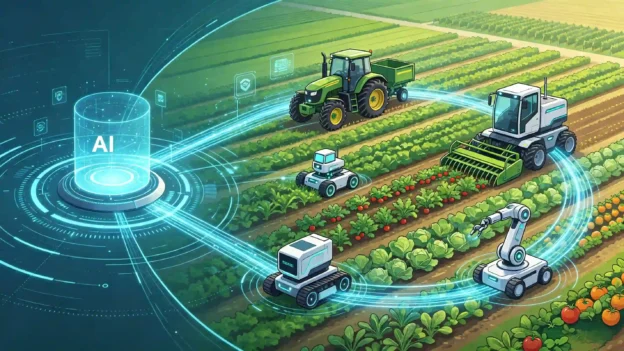
The future of agricultural robotics is closely tied to the future of autonomous farming. In the coming decades, we can expect to see farms that operate with minimal human intervention. Fleets of robots will plant, monitor, and harvest crops. Autonomous tractors will prepare fields and apply inputs. Drones will scout for problems. AI will coordinate everything, optimizing operations in real time.

This vision is not science fiction. Elements of it are already in place. Fully autonomous farms exist for certain crops in controlled environments. In open fields, autonomy is increasing incrementally. As technology improves and costs fall, adoption will accelerate.

However, the transition will not be uniform. Large farms with capital and technical expertise will adopt robots first. Smallholders may benefit through shared platforms, cooperatives, and service models. Developing countries may leapfrog to advanced technologies, skipping older systems. The path will vary by region, crop, and farm type.

What is clear is that robotics will play an increasingly important role in agriculture. It will not replace farmers entirely. Farming involves judgment, adaptability, and local knowledge that robots cannot easily replicate. But it will augment human capabilities, making farming more productive, sustainable, and resilient.

Conclusion

Robotics and automation are transforming agriculture. Robots plant, weed, spray, harvest, and sort with precision and consistency. They address labor shortages, reduce costs, and improve sustainability. They work in conditions that are unsafe or uncomfortable for humans. And they are essential for the autonomous farms of the future.

While challenges remain, including cost, speed, reliability, and social impact, the trajectory is clear. Robotics is becoming more capable, more affordable, and more integrated with other smart agriculture technologies. In the next article in this series, we will turn to a different kind of technology: blockchain and digital traceability. These tools connect farms to consumers, ensuring transparency, safety, and trust throughout the food supply chain.

Next in the series: “From Farm to Fork: Blockchain and Digital Traceability in Agriculture”


AI in the Field: How Artificial Intelligence Is Powering Smart Agriculture

Series: The Future of Agriculture — Article 5 of 12


Introduction

In the previous two articles, we explored the technologies that collect agricultural data: IoT sensors on the ground, and drones and satellites in the sky. These tools generate enormous volumes of information—soil moisture readings, thermal images, vegetation indices, weather records, and more. But data alone does not improve farming. Data must be interpreted, and decisions must be made. This is where artificial intelligence comes in.

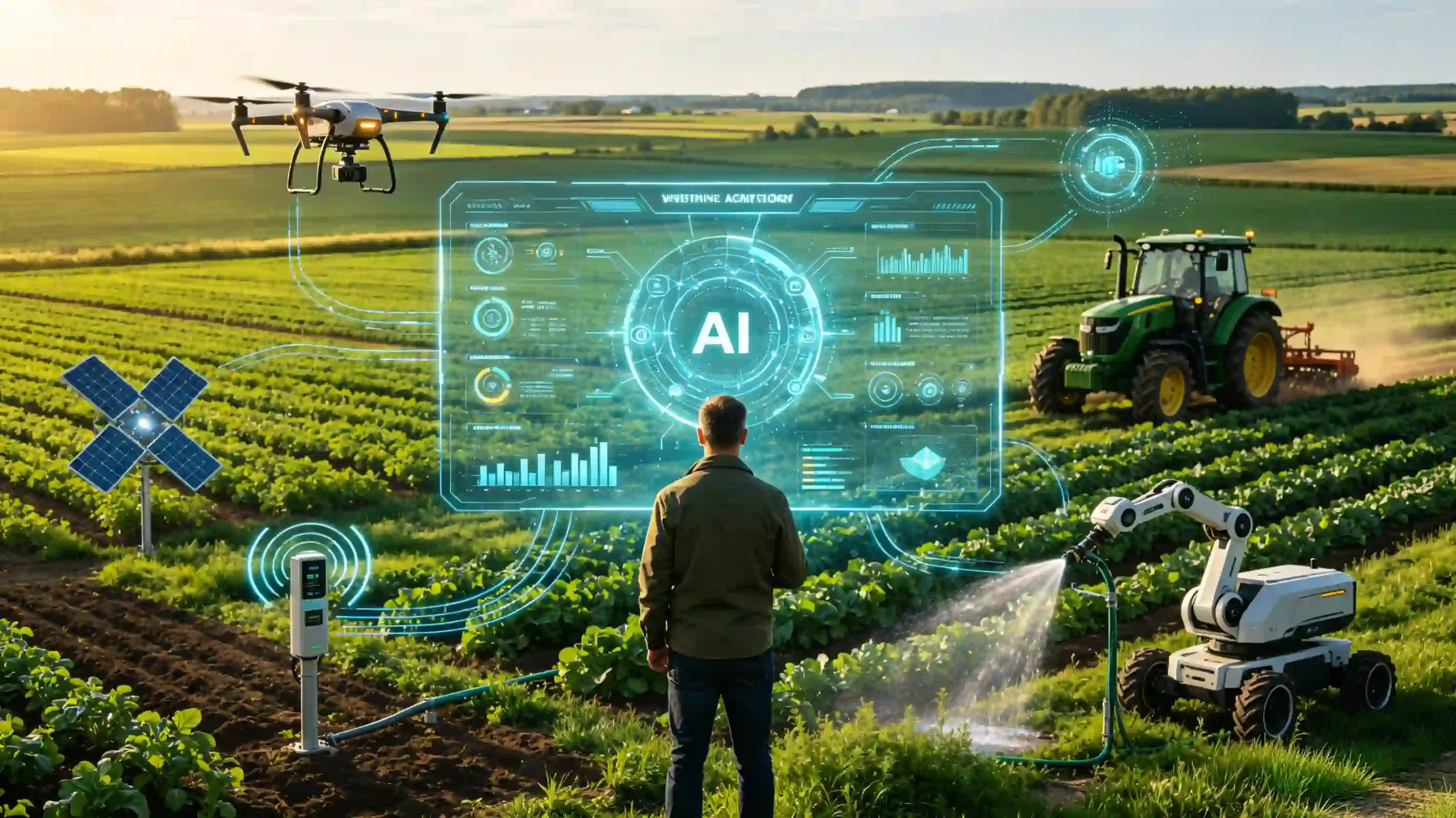
Artificial intelligence (AI) is the brain of smart agriculture. It transforms raw data into insights, predictions, and recommendations. It can detect patterns that humans would miss, forecast outcomes with remarkable accuracy, and even automate decisions in real time. Together with IoT, remote sensing, and robotics, AI forms the core of Agriculture 4.0.

This article explores how AI is being applied in agriculture. We will examine the key AI technologies, their applications in farming, the benefits they deliver, and the challenges they face. By the end, you will understand why AI is considered one of the most transformative forces in modern agriculture.

What Is Artificial Intelligence?

Artificial intelligence refers to computer systems that can perform tasks that normally require human intelligence. These tasks include learning from data, recognizing patterns, understanding language, making decisions, and solving problems. AI is not a single technology but a broad field that includes several subdisciplines.

Machine learning is the most relevant subdiscipline for agriculture. Machine learning algorithms learn from data rather than being explicitly programmed. They improve their performance as they are exposed to more data. This makes them well-suited to agriculture, where conditions are complex, variable, and constantly changing.

Deep learning is a subset of machine learning that uses artificial neural networks with many layers. Deep learning has revolutionized image recognition, natural language processing, and many other fields. In agriculture, deep learning is used to analyze satellite imagery, detect plant diseases, and predict crop yields.

Computer vision is another important AI technology. It enables computers to interpret visual information from images and videos. In agriculture, computer vision is used to identify pests, count plants, grade produce, and guide robots. It is one of the most active areas of agricultural AI research.

Natural language processing (NLP) enables computers to understand and generate human language. In agriculture, NLP powers chatbots and virtual assistants that answer farmers’ questions, provide advice, and deliver market information. It also enables analysis of unstructured text, such as research papers and news articles.

Finally, expert systems and decision support systems encode human expertise into software. They use rules and logic to provide recommendations based on data and knowledge. While less flexible than machine learning, they can be valuable in situations where data is limited or where transparency is important.

How AI Learns from Agricultural Data

AI systems learn from data. In agriculture, data comes from many sources: sensors, drones, satellites, weather stations, machinery, and historical records. This data is collected, cleaned, and organized into datasets that AI algorithms can process.

Supervised learning is the most common approach. In supervised learning, the algorithm is trained on labeled data—examples where the correct answer is known. For example, a dataset might contain thousands of images of plant leaves, each labeled as healthy or diseased. The algorithm learns to recognize the patterns associated with each label. Once trained, it can classify new images it has never seen before.

Unsupervised learning is used when data is not labeled. The algorithm looks for patterns and structures in the data on its own. For example, it might group fields into clusters based on soil and weather conditions, revealing natural groupings that inform management.

Reinforcement learning is a third approach, where an algorithm learns by interacting with an environment and receiving feedback. It is used in robotics and autonomous systems, where the algorithm must learn to perform tasks through trial and error. In agriculture, reinforcement learning is being applied to irrigation scheduling, crop rotation planning, and robot control.

The quality of AI depends on the quality of data. Inaccurate, incomplete, or biased data leads to poor results. Data collection and preprocessing are therefore critical steps in any AI project. This is one reason why the sensors and remote sensing technologies discussed in previous articles are so important—they provide the raw material that AI needs to function.

Key Applications of AI in Agriculture

AI is being applied across the agricultural value chain, from planting to harvesting to marketing. The following sections describe some of the most important applications.

Disease and Pest Detection

One of the most mature applications of AI in agriculture is disease and pest detection. Computer vision algorithms can analyze images of leaves, stems, and fruits to identify signs of disease or pest damage. They can distinguish between different types of diseases and pests, and they can detect problems early, before symptoms are visible to the human eye.

For example, a farmer can take a photo of a leaf with a smartphone and receive an instant diagnosis. The AI model, trained on millions of images, identifies the disease and recommends treatment. This is particularly valuable in regions where access to agricultural experts is limited. It enables farmers to act quickly, reducing crop losses and pesticide use.

AI-powered traps and sensors can also monitor pests automatically. Cameras and sensors in the field capture images of insects, and AI identifies the species and counts the population. This provides real-time monitoring without manual inspection, enabling timely and targeted interventions.

Yield Prediction

Predicting crop yields accurately is valuable for farmers, buyers, insurers, and policymakers. AI models can predict yields by analyzing data from multiple sources: satellite imagery, weather records, soil data, and historical yields. These models can forecast yields weeks or months before harvest, giving stakeholders time to plan.

Yield prediction helps farmers decide how much fertilizer to apply, when to harvest, and how to market their crops. It helps buyers secure supply and manage inventory. It helps insurers assess risk and set premiums. And it helps governments anticipate food shortages and plan imports or aid.

Accuracy depends on data quality and model design. In well-monitored fields with abundant data, AI models can achieve high accuracy. In data-scarce regions, predictions are less reliable. Efforts are underway to develop models that work with limited data, using transfer learning and other techniques.

Precision Irrigation and Fertilization

AI can optimize irrigation and fertilization by analyzing sensor data, weather forecasts, and crop models. Instead of applying water and nutrients on a fixed schedule, AI recommends applications based on actual conditions and crop needs. This saves resources, reduces environmental impact, and improves crop health.

For example, an AI system might integrate soil moisture data, weather forecasts, and evapotranspiration models to determine exactly when and how much to irrigate. It can then control irrigation valves automatically, delivering water only where it is needed. Similar approaches apply to fertilization, where AI recommends nutrient applications based on soil tests, crop stage, and yield goals.

Crop and Variety Selection

Choosing the right crop and variety for a given field is a complex decision. It depends on soil type, climate, water availability, market prices, and many other factors. AI can help by analyzing historical data and predicting how different crops and varieties will perform under different conditions.

Recommendation systems can suggest the best options for a specific field and season. They can also account for risk, helping farmers diversify and reduce exposure to price and weather volatility. This is especially valuable in a changing climate, where historical patterns are less reliable.

Autonomous Machinery and Robotics

AI is essential for autonomous machinery and robotics. Self-driving tractors, harvesters, and robots rely on AI to perceive their environment, make decisions, and navigate fields. Computer vision enables them to identify obstacles, avoid collisions, and perform tasks with precision.

For example, an autonomous weeding robot uses computer vision to distinguish between crops and weeds. It then removes the weeds mechanically or with targeted herbicides, reducing chemical use. An autonomous harvester uses AI to identify ripe fruits and pick them without damaging the plant. These systems address labor shortages and improve efficiency.

Supply Chain and Market Intelligence

AI is also transforming agricultural supply chains and markets. Demand forecasting models predict how much of a product will be needed, helping farmers and distributors plan. Price prediction models forecast market trends, helping farmers decide when to sell. Logistics optimization models reduce transport costs and spoilage.

AI-powered platforms connect farmers with buyers, providing transparency and reducing intermediaries. They can also verify sustainability claims and support traceability, as discussed in a later article on blockchain. These applications improve efficiency and create new opportunities for farmers.

Chatbots and Advisory Services

AI-powered chatbots and virtual assistants provide farmers with instant advice and support. They can answer questions about crop management, pest control, weather, and market prices. They can be accessed via smartphone, making them available even in remote areas.

These tools are particularly valuable for smallholder farmers, who may lack access to extension services. By providing personalized, timely advice, they help farmers improve productivity and incomes. As language models improve, these assistants will become more capable and more natural to interact with.

Benefits of AI in Agriculture

AI delivers several benefits to agriculture. It increases productivity by enabling better decisions and more precise operations. It reduces costs by optimizing input use and reducing waste. It improves sustainability by reducing water, fertilizer, and pesticide use. It enhances resilience by helping farmers anticipate and respond to risks. And it improves food safety and quality by enabling better monitoring and traceability.

AI also helps address labor shortages by automating tasks and supporting decision-making. It can capture and preserve expert knowledge, making it available to more farmers. And it can process vast amounts of data quickly, providing insights that would be impossible for humans to derive manually.

Challenges and Limitations

Despite its potential, AI in agriculture faces several challenges. Data quality and availability are major barriers. AI models require large, high-quality datasets to perform well. In many regions, such data is scarce or unavailable. Collecting and labeling data is expensive and time-consuming.

Cost is another barrier. Developing and deploying AI systems requires investment in hardware, software, and expertise. While cloud services have reduced costs, many farmers, especially smallholders, cannot afford these technologies. Shared platforms and low-cost solutions are needed to broaden access.

Digital skills are also a limitation. AI systems require users who can interpret their outputs and integrate them into farm management. Training and support are essential. User-friendly interfaces and advisory services can help bridge the gap.

Data ownership and privacy are growing concerns. Farmers may be reluctant to share data if they fear it will be used against them or sold without their consent. Clear policies and regulations are needed to protect farmers’ rights and build trust.

Algorithmic bias is another risk. If training data is not representative, AI models may perform poorly for certain crops, regions, or farming systems. This can exacerbate inequalities. Diverse and inclusive datasets are essential to ensure that AI benefits everyone.

Finally, there is the question of transparency and accountability. Many AI models, especially deep learning models, are “black boxes”—it is difficult to understand how they reach their conclusions. This can be a problem when decisions have significant consequences. Explainable AI is an active area of research that aims to make AI more transparent and trustworthy.

The Future of AI in Agriculture

The future of AI in agriculture is full of promise. AI models are becoming more accurate, more efficient, and more accessible. Foundation models—large AI models trained on vast datasets—are being adapted to agriculture, enabling new applications and reducing the need for custom development.

Edge AI, which runs AI models on devices in the field rather than in the cloud, is reducing latency and bandwidth requirements. This enables real-time decision-making in remote areas with limited connectivity. It also improves privacy and security by keeping data local.

Integration with other technologies is advancing. AI is being combined with IoT, drones, robotics, and blockchain to create comprehensive smart farming systems. Data from multiple sources is fused to provide holistic insights and automated actions. This integration is essential for the autonomous farms of the future.

Perhaps most importantly, AI is becoming more accessible to smallholder farmers. Mobile phone-based AI services, shared platforms, and open-source models are lowering barriers to entry. In developing countries, AI is being used to provide advice, detect diseases, and improve market access. This has the potential to transform livelihoods and food security on a global scale.

Conclusion

Artificial intelligence is the brain of smart agriculture. It transforms the data collected by sensors, drones, and satellites into insights, predictions, and recommendations. It detects diseases, predicts yields, optimizes irrigation and fertilization, guides robots, and supports supply chains. It increases productivity, reduces costs, and improves sustainability. While challenges remain, including data quality, cost, skills, and trust, the trajectory is clear. AI is becoming an indispensable tool for modern farming.

In the next article in this series, we will explore robotics and automation—the hands of smart agriculture. Robots are taking on tasks that were once performed by humans, from planting and weeding to harvesting and sorting. Together with AI, they are paving the way for autonomous farms that can operate with minimal human intervention.

Next in the series: “Robots in the Fields: Automation and the Rise of Autonomous Farming”


Sensors in the Field: How IoT Is Transforming Agriculture

Series: The Future of Agriculture — Article 4 of 12


Introduction

In the previous article, we traced the evolution of agriculture from traditional farming to the emerging era of Agriculture 4.0. We saw how each era built on the last, and how the current transformation is driven by data, connectivity, and intelligence. Now it is time to examine the technologies that make this transformation possible.

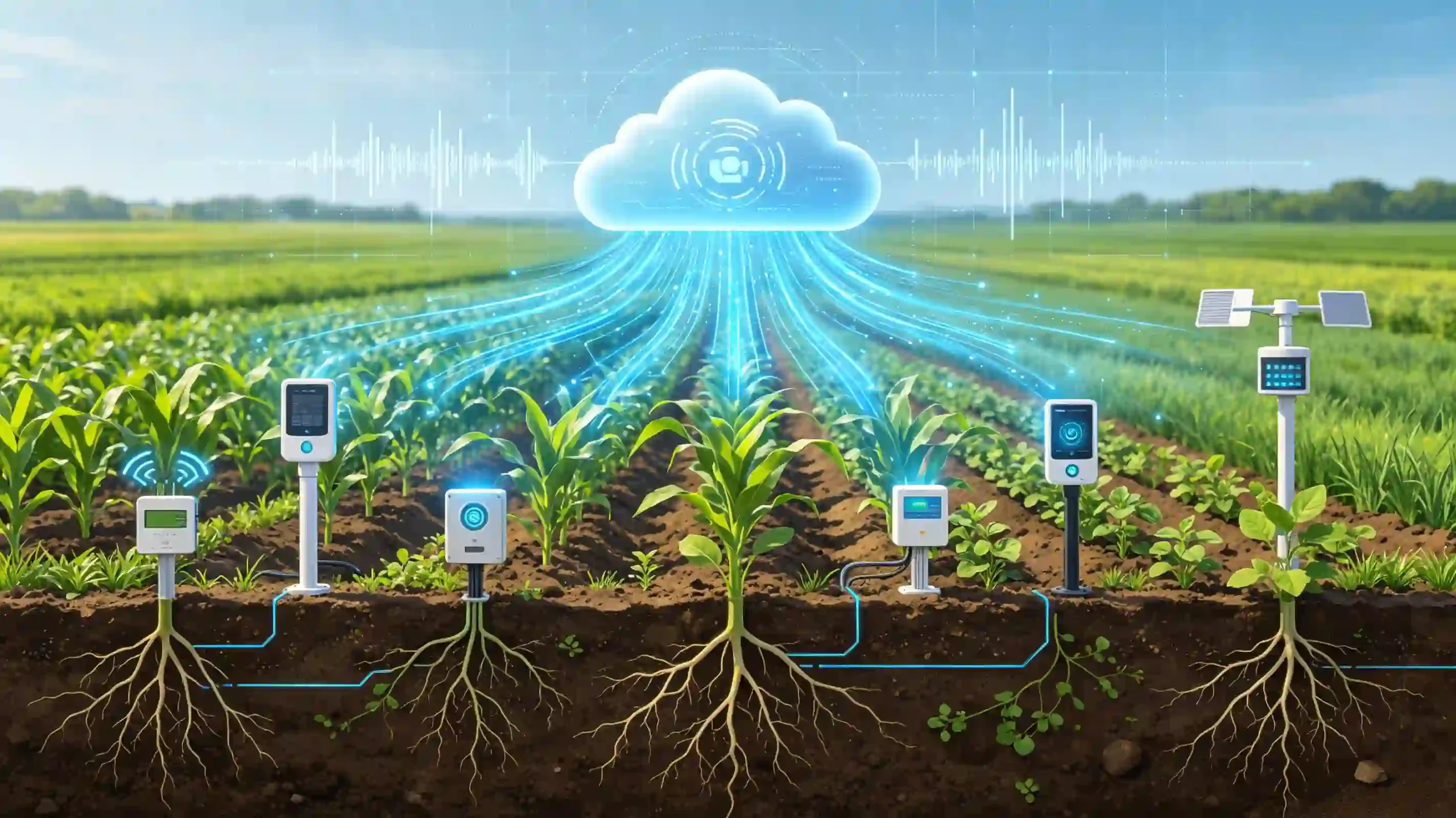
We begin with the Internet of Things (IoT) and sensors. These devices are the eyes and ears of smart agriculture. They collect the raw data that feeds every other technology in the smart farming toolkit—from AI algorithms to autonomous machinery. Without accurate, timely data, precision agriculture is impossible. IoT sensors provide that data continuously, enabling farmers to monitor conditions in real time and respond quickly to changing circumstances.

This article explores what IoT sensors are, how they work, what they measure, and how they are being used in agriculture today. We will also discuss the challenges of deploying IoT in rural environments and the future potential of this foundational technology.

What Is the Internet of Things?

The Internet of Things refers to the network of physical devices—sensors, machines, and appliances—that are connected to the internet and can collect and exchange data. In agriculture, IoT devices range from simple soil moisture probes to complex weather stations and automated irrigation controllers. These devices communicate wirelessly with each other and with central platforms, where data is stored, processed, and analyzed.

The key feature of IoT is connectivity. A sensor that simply records data locally is not part of the IoT. It becomes an IoT device when it can transmit that data to a network, where it can be accessed and acted upon remotely. This connectivity enables real-time monitoring and control, which is essential for smart agriculture.

IoT systems typically consist of four layers. The perception layer includes the sensors and actuators that interact with the physical environment. The network layer includes the communication technologies that transmit data. The processing layer includes the platforms and algorithms that analyze data. The application layer includes the user interfaces and services that deliver insights and control to farmers. Understanding these layers helps explain how IoT works and where challenges may arise.

Types of Agricultural Sensors

Agricultural sensors can be grouped into several categories based on what they measure. Each type provides different information that is useful for different purposes.

Soil Sensors

Soil sensors measure conditions below the surface, where roots grow and where many critical processes occur. Soil moisture sensors are among the most common and valuable. They measure the volumetric water content in soil, helping farmers decide when and how much to irrigate. Over-irrigation wastes water and can leach nutrients away from roots. Under-irrigation stresses plants and reduces yields. Soil moisture sensors enable precise irrigation scheduling.

Soil temperature sensors measure how warm or cool the soil is. Temperature affects seed germination, root growth, and microbial activity. It also influences the availability of nutrients to plants. Soil pH sensors measure acidity or alkalinity, which affects nutrient availability and crop health. Soil nutrient sensors, still developing, can measure nitrogen, phosphorus, and potassium levels. These sensors help farmers apply fertilizer only when and where it is needed, reducing costs and environmental impact.

Other soil sensors measure electrical conductivity, which indicates salinity and soil texture. Excessive salinity can damage crops and reduce yields. Soil compaction sensors measure density, which affects water infiltration and root penetration. Together, these sensors provide a comprehensive picture of soil health and fertility.

Weather and Climate Sensors

Weather sensors measure atmospheric conditions that affect crop growth and farm operations. Temperature and humidity sensors are fundamental. They help farmers predict disease risk, since many fungal and bacterial diseases thrive in warm, humid conditions. They also inform decisions about planting, spraying, and harvesting.

Rain gauges measure precipitation, helping farmers track water inputs and adjust irrigation accordingly. Wind sensors measure speed and direction, which is important for spraying operations. Spraying in high winds can cause drift, wasting chemicals and potentially damaging neighboring crops. Solar radiation sensors measure sunlight intensity, which drives photosynthesis and affects crop growth and water demand.

Advanced weather stations combine multiple sensors into a single unit. They may also include barometric pressure sensors, leaf wetness sensors, and soil temperature probes. These stations can provide localized weather data that is more accurate than regional forecasts, which may not reflect conditions on a specific farm.

Plant and Crop Sensors

Plant sensors measure the condition of the crops themselves. Optical sensors use light reflectance to assess plant health. Healthy plants reflect light differently than stressed plants, and these differences can be detected by sensors. Multispectral and hyperspectral sensors measure reflectance across multiple wavelengths, providing detailed information about chlorophyll content, water status, and nutrient levels.

Thermal sensors measure plant temperature, which indicates water stress. When plants lack water, they close their stomata to conserve moisture, which raises their temperature. Thermal imaging can detect this before visible symptoms appear. Fluorescence sensors measure chlorophyll fluorescence, which provides information about photosynthetic efficiency and stress.

Some plant sensors are attached directly to plants. Stem diameter sensors measure growth and water status. Sap flow sensors measure water movement through the plant. These sensors provide continuous, high-resolution data but are typically used in research or high-value crops rather than broad-acre farming.

Livestock Sensors

IoT sensors are also used in livestock farming. Ear tags and collars with accelerometers and GPS can track animal movement, activity, and location. Health sensors can monitor body temperature, heart rate, and rumination. These sensors help farmers detect illness early, improve breeding management, and optimize grazing. In poultry and dairy operations, sensors monitor environmental conditions and automate feeding and ventilation.

Water and Irrigation Sensors

Water sensors measure the quality and quantity of water used in irrigation. Flow meters measure water volume, helping farmers track usage and detect leaks. Pressure sensors monitor pipeline pressure, identifying blockages or failures. Water quality sensors measure pH, salinity, and nutrient levels, which affect crop health and soil conditions. These sensors are essential for efficient irrigation management, especially in water-scarce regions.

Communication Technologies

IoT sensors need to transmit data to be useful. Several communication technologies are available, each with different characteristics and trade-offs. Wi-Fi is common but has limited range and high power consumption. Bluetooth is low-power but short-range. Cellular networks (3G, 4G, 5G) provide wide coverage but can be expensive and may not reach rural areas.

Low-Power Wide-Area Networks (LPWAN) are particularly well-suited to agriculture. Technologies such as LoRaWAN and NB-IoT offer long-range communication with low power consumption, allowing sensors to operate for years on a single battery. They can penetrate dense vegetation and reach remote fields. These characteristics make LPWAN a popular choice for agricultural IoT deployments.

The choice of communication technology depends on the specific application. A soil moisture sensor in a small garden might use Wi-Fi. A weather station on a large farm might use LoRaWAN. A livestock tracker might use cellular networks. In practice, many farms use a combination of technologies to meet different needs.

Applications in Agriculture

IoT sensors are being used in a wide range of agricultural applications. One of the most common is precision irrigation. Soil moisture sensors and weather data are used to determine exactly when and how much to irrigate. Automated systems can then control valves and pumps, delivering water only where it is needed. This saves water, reduces energy costs, and improves crop health.

Another application is precision fertilization. Soil nutrient sensors and plant sensors guide the application of fertilizers. Variable-rate technology allows different amounts of fertilizer to be applied to different parts of a field. This reduces waste, saves money, and minimizes environmental pollution.

Pest and disease management is another important application. Weather sensors and plant sensors can detect conditions that favor pest outbreaks or disease development. Early warning systems can alert farmers, allowing them to take targeted action before problems spread. This reduces pesticide use and improves crop quality.

IoT sensors also support greenhouse and controlled-environment agriculture. Sensors monitor temperature, humidity, carbon dioxide, and light levels. Automated systems adjust ventilation, heating, lighting, and irrigation to maintain optimal growing conditions. This enables year-round production and higher yields.

In livestock farming, IoT sensors monitor animal health, behavior, and location. They can detect lameness, illness, and estrus, helping farmers improve animal welfare and productivity. Automated feeding and milking systems use sensor data to optimize operations.

Supply chain and storage applications are also growing. Sensors monitor temperature and humidity during transport and storage, ensuring that perishable products remain fresh. They can detect spoilage or contamination and trigger alerts. This reduces waste and improves food safety.

Challenges and Limitations

Despite their potential, IoT sensors face several challenges in agriculture. Cost is a major barrier. While sensor prices have fallen, deploying a large network of sensors can still be expensive, especially for smallholder farmers. The cost includes not only the sensors themselves but also communication infrastructure, data platforms, and maintenance.

Power supply is another challenge. Many sensors are deployed in remote fields without access to electricity. They rely on batteries, which must be replaced periodically. Solar-powered sensors can overcome this limitation, but they add cost and complexity. Energy harvesting technologies, which capture energy from sunlight, vibration, or temperature differences, are promising but not yet widely adopted.

Connectivity is a persistent issue in rural areas. Many farms lack reliable internet access, making it difficult to transmit data. LPWAN technologies help, but coverage is still incomplete in many regions. Without connectivity, IoT sensors cannot deliver their full value.

Data management is another challenge. A large farm may generate millions of data points every day. Storing, processing, and analyzing this data requires robust infrastructure and expertise. Farmers may lack the skills or resources to manage complex data systems. User-friendly platforms and advisory services are needed to bridge this gap.

Sensor accuracy and calibration are also important. Sensors can drift over time, producing inaccurate readings. Regular calibration and maintenance are necessary to ensure data quality. In harsh agricultural environments, sensors may be damaged by weather, animals, or machinery. Ruggedized designs and protective enclosures help but add cost.

Finally, interoperability is a challenge. Sensors and platforms from different vendors may not work together, making it difficult to integrate multiple technologies. Standards are emerging, but widespread adoption is still limited. Farmers may find themselves locked into proprietary systems, limiting their flexibility and bargaining power.

The Future of Agricultural IoT

The future of agricultural IoT is promising. Sensors are becoming smaller, cheaper, and more capable. New sensing technologies, such as nanoscale sensors and biosensors, may enable new applications. Energy harvesting and battery technology are improving, extending sensor lifetimes. Communication networks are expanding, bringing connectivity to more rural areas.

Artificial intelligence is enhancing the value of IoT data. AI algorithms can analyze sensor data to predict crop yields, detect diseases, and recommend actions. They can also automate decision-making, reducing the burden on farmers. Edge computing, which processes data locally rather than in the cloud, is reducing latency and bandwidth requirements.

Integration with other technologies is also advancing. IoT sensors are being combined with drones, satellites, and robots to create comprehensive smart farming systems. Data from multiple sources is fused to provide a more complete picture of farm conditions. This integration is essential for the autonomous farms of the future.

Perhaps most importantly, IoT is becoming more accessible to smallholder farmers. Low-cost sensors, mobile phone-based platforms, and shared infrastructure are lowering barriers to entry. In developing countries, IoT is being used to provide weather forecasts, market prices, and agronomic advice to farmers who previously had limited access to information. This has the potential to improve livelihoods and food security on a large scale.

Conclusion

IoT sensors are the foundation of smart agriculture. They collect the data that drives precision irrigation, fertilization, pest management, and countless other applications. They enable farmers to monitor conditions in real time, respond quickly to changes, and make better decisions. While challenges remain, including cost, connectivity, power, and data management, the trajectory is clear. Sensors are becoming more capable, more affordable, and more integrated into farming systems.

In the next article in this series, we will explore another critical source of agricultural data: drones and satellites. These technologies provide a bird’s-eye view of farms, complementing the ground-level data from IoT sensors. Together, they form the foundation of the “air-ground integrated” data systems that are transforming agriculture.

Next in the series: “Eyes in the Sky: Drones and Satellite Remote Sensing in Agriculture”


The Evolution of Agriculture: From 1.0 to 4.0

Series: The Future of Agriculture — Article 3 of 12


Introduction

In the first article of this series, we examined the global challenges forcing agriculture to transform: population growth, resource depletion, climate change, labor shortages, and shifting consumer expectations. We concluded that traditional farming can no longer meet the demands of the twenty-first century. But to understand where agriculture is heading, we must first understand where it has been.

Agriculture has undergone several major transformations throughout history. Each one built on the achievements of the previous era while responding to new pressures and opportunities. Today, we are in the midst of another transformation—one that is often called Agriculture 4.0 or smart agriculture. This article traces the evolution of farming from its traditional roots to the emerging era of digital, intelligent, and autonomous agriculture. By understanding this history, we can better appreciate the significance of the changes underway and the challenges that lie ahead.

Agriculture 1.0: Traditional Farming

Agriculture 1.0 refers to the traditional farming systems that dominated for thousands of years, from the Neolithic Revolution to the early twentieth century. During this long period, farming relied almost entirely on human and animal labor, simple tools, and natural processes. Farmers used plows, sickles, and hoes, often made of wood, stone, or bronze. Later, iron and steel tools improved efficiency, but the fundamental approach remained the same.

Traditional farming was characterized by small-scale, subsistence-oriented production. Most farmers grew crops and raised livestock primarily to feed their families and local communities. Surplus was traded or sold in nearby markets. Knowledge was passed down through generations, and practices varied widely from region to region based on climate, soil, and culture. Crop rotation, composting, and mixed farming were common techniques that maintained soil fertility and reduced risk.

However, traditional farming was also labor-intensive and vulnerable to natural shocks. Droughts, floods, pests, and diseases could wipe out entire harvests, leading to famine and hardship. Yields were low by modern standards, and food security was precarious. Despite these limitations, Agriculture 1.0 sustained human civilization for millennia and laid the foundation for all subsequent developments.

Agriculture 2.0: The Mechanization and Chemical Revolution

Agriculture 2.0 emerged in the late nineteenth and early twentieth centuries, driven by industrialization and scientific advances. This era is often called the Green Revolution, although that term more specifically refers to the mid-twentieth-century period when high-yielding crop varieties were introduced. The key features of Agriculture 2.0 were mechanization, chemical inputs, and improved crop varieties.

Mechanization began with the invention of the steam engine and later the internal combustion engine. Tractors, combines, and other machines replaced human and animal labor, dramatically increasing the scale and efficiency of farming. A single farmer could now cultivate far more land than before. This led to larger farms, specialization, and the displacement of rural labor. In countries such as the United States and the Soviet Union, collectivization and industrial farming became widespread.

Chemical inputs transformed soil fertility and pest control. Synthetic fertilizers, developed through the Haber-Bosch process, provided abundant nitrogen to crops. Pesticides and herbicides controlled weeds, insects, and diseases. These inputs boosted yields and reduced losses, but they also had environmental consequences. Runoff from fertilizers polluted waterways, causing algal blooms and dead zones. Pesticides harmed beneficial insects and birds, and some persisted in the environment for decades.

Improved crop varieties, developed through conventional breeding, increased yields and resistance to pests and diseases. The Green Revolution of the 1960s and 1970s introduced high-yielding wheat and rice varieties to developing countries, saving millions from starvation. Norman Borlaug, who led this effort, received the Nobel Peace Prize for his work. However, the Green Revolution also increased dependence on fertilizers, pesticides, and irrigation, and it favored large farms over smallholders.

Agriculture 2.0 dramatically increased food production and reduced hunger in many parts of the world. But it also created new problems: environmental degradation, loss of biodiversity, soil depletion, and greenhouse gas emissions. These problems set the stage for the next transformation.

Agriculture 3.0: The Information and Precision Era

Agriculture 3.0 began in the late twentieth century with the advent of information technology. This era is characterized by the use of computers, satellites, and sensors to collect and analyze data, enabling more precise and efficient farming. The term “precision agriculture” was coined to describe this approach.

The first major technology of Agriculture 3.0 was the Global Positioning System (GPS), which became fully operational in the 1990s. GPS allowed farmers to map their fields, track equipment, and apply inputs with unprecedented accuracy. Variable-rate technology enabled farmers to adjust the amount of seed, fertilizer, and pesticide applied to different parts of a field based on soil conditions and crop needs. This reduced waste and improved efficiency.

Geographic Information Systems (GIS) and remote sensing further enhanced precision agriculture. Satellite imagery and aerial photography provided information about crop health, soil moisture, and pest infestations. Farmers could monitor large areas without physically inspecting every field. Yield monitors on combines recorded productivity data, allowing farmers to identify patterns and make better decisions.

The internet and mobile communications revolutionized information sharing. Farmers could access weather forecasts, market prices, and agronomic advice online. Mobile apps and online platforms connected farmers with buyers, suppliers, and advisors. Data became a valuable resource, and new companies emerged to provide data analytics and decision support services.

Agriculture 3.0 improved efficiency, reduced costs, and increased yields. It also laid the groundwork for the next era by demonstrating the value of data and connectivity in farming. However, precision agriculture remained largely a tool for large farms in developed countries. Smallholders and farmers in developing regions often lacked access to the technology and infrastructure needed to benefit.

Agriculture 4.0: The Smart and Autonomous Era

Agriculture 4.0 is the current and emerging era, characterized by the integration of advanced technologies such as the Internet of Things (IoT), artificial intelligence (AI), robotics, big data, and cloud computing. It builds on the precision of Agriculture 3.0 but goes further by automating decision-making and operations.

One defining feature of Agriculture 4.0 is the proliferation of connected sensors. IoT devices monitor soil moisture, temperature, humidity, nutrient levels, and pest pressure in real time. This data is transmitted to cloud platforms, where AI algorithms analyze it and generate recommendations. Farmers can access this information on their smartphones and make informed decisions quickly. In some cases, the system can act autonomously, controlling irrigation, ventilation, and lighting without human intervention.

Robotics and automation are also central to Agriculture 4.0. Autonomous tractors, drones, and robots can perform tasks such as planting, spraying, weeding, and harvesting with minimal human oversight. These technologies address labor shortages and improve precision. In controlled-environment agriculture, such as greenhouses and vertical farms, robots and AI work together to optimize growing conditions year-round.

Blockchain and digital traceability are emerging as important tools in Agriculture 4.0. They enable secure and transparent tracking of food from farm to consumer, building trust and improving food safety. Consumers can scan a QR code and see the entire history of a product, including where it was grown, how it was processed, and how it was transported.

Agriculture 4.0 is still in its early stages. Adoption varies widely by region, crop, and farm size. But the direction is clear: farming is becoming more data-driven, automated, and connected. The ultimate goal is a more productive, sustainable, and resilient food system that can meet the challenges described in the first article of this series.

Comparing the Four Eras

Each era of agriculture has its own characteristics, strengths, and limitations. Agriculture 1.0 was sustainable in the sense that it relied on renewable resources and maintained soil fertility, but it was low-yielding and vulnerable. Agriculture 2.0 dramatically increased yields but at significant environmental cost. Agriculture 3.0 improved efficiency through data and precision but remained largely dependent on human decision-making. Agriculture 4.0 promises to integrate the best of previous eras while addressing their weaknesses through intelligence and automation.

It is important to note that these eras are not strictly sequential. Elements of all four eras coexist today. Some farmers still use traditional methods, while others operate fully autonomous farms. The transition is uneven and context-dependent. In developing countries, Agriculture 2.0 and 3.0 technologies are still being adopted, while in advanced economies, Agriculture 4.0 is emerging. This diversity reflects the varying needs, resources, and constraints of different regions.

The Road Ahead

The evolution of agriculture is not over. Agriculture 4.0 is still unfolding, and new technologies and approaches are emerging rapidly. The coming decades will likely see further integration of AI, robotics, biotechnology, and renewable energy into farming systems. The boundaries between agriculture, energy, and information technology will blur. Farms may become not only food producers but also energy generators, carbon sinks, and data hubs.

However, technology alone will not determine the future of agriculture. Social, economic, and political factors will also play a crucial role. Questions of equity, access, data ownership, and environmental sustainability must be addressed. The benefits of smart agriculture must be shared widely, not concentrated in the hands of a few large players. Smallholder farmers, rural communities, and developing countries must be included in the transformation.

In the next article in this series, we will begin exploring the technologies of Agriculture 4.0 in detail. We will start with the Internet of Things and sensors—the eyes and ears of smart agriculture. These devices are the foundation of data-driven farming, and understanding them is essential for anyone interested in the future of food and agriculture.

Next in the series: “Sensors in the Field: How IoT Is Transforming Agriculture”


Why Agriculture Must Change: Global Challenges and the Driving Forces of Transformation

Series: The Future of Agriculture — Article 2 of 12


Introduction

Agriculture is the oldest and most essential human activity. For thousands of years, it has provided the food, fiber, and raw materials that sustain civilization. Yet today, agriculture stands at a crossroads. The systems that fed the world in the twentieth century are struggling to meet the demands of the twenty-first. Population growth, climate change, resource depletion, labor shortages, and shifting consumer expectations are putting unprecedented pressure on farmers and food systems around the world.

This is the first article in a series exploring the future of agriculture. Before we dive into technologies such as sensors, drones, artificial intelligence, and robotics, we must first understand the problems they are meant to solve. Why does agriculture need to change? What forces are driving the transformation? And what happens if we fail to adapt? This article addresses these questions, setting the stage for the rest of the series.

The Population Challenge: Feeding Nearly 10 Billion People

The most fundamental driver of agricultural change is population growth. According to the United Nations, the global population is expected to reach approximately 9.7 billion by 2050, up from around 8 billion today. Most of this growth will occur in developing countries, particularly in sub-Saharan Africa and South Asia. Feeding this many people will require a substantial increase in food production. The Food and Agriculture Organization (FAO) estimates that global food production must rise by about 70 percent compared to 2009 levels to meet demand in 2050.

This is a daunting challenge. It is not simply a matter of planting more crops. The additional food must be produced in a way that is affordable, nutritious, and environmentally sustainable. It must also be distributed equitably, since hunger and malnutrition persist even in a world that already produces enough food to feed everyone. The problem is not only quantity but also access, quality, and resilience.

Moreover, dietary patterns are shifting. As incomes rise in developing countries, people consume more meat, dairy, and processed foods. Producing these foods requires significantly more land, water, and energy than producing grains and vegetables. This dietary transition amplifies the pressure on natural resources and makes the challenge of feeding the world even greater.

Shrinking Resources: Land, Water, and Soil

While the demand for food grows, the resources available to produce it are shrinking. Arable land is limited and increasingly degraded. Urbanization, industrialization, and infrastructure development consume farmland every year. According to some estimates, the world has lost about one-third of its arable land to erosion and degradation over the past forty years. Soil salinity, desertification, and nutrient depletion further reduce the land’s productive capacity.

Water is another critical constraint. Agriculture accounts for about 70 percent of global freshwater withdrawals. In many regions, groundwater is being pumped faster than it can be replenished, leading to falling water tables and long-term scarcity. Climate change is intensifying droughts and altering rainfall patterns, making water availability even less predictable. Farmers who once relied on consistent seasonal rains now face uncertainty and risk.

Soil health is declining in many parts of the world. Intensive tillage, monocropping, and excessive use of chemical fertilizers have degraded soil structure and reduced organic matter. Healthy soil is essential for water retention, nutrient cycling, and carbon storage. Its loss threatens not only productivity but also the environment. Restoring soil health requires changes in farming practices, many of which are enabled by smart technologies.

Climate Change: A Threat Multiplier

Climate change is perhaps the most powerful and unpredictable force reshaping agriculture. Rising temperatures, changing precipitation patterns, and more frequent extreme weather events are already affecting crop yields and livestock production. Heat stress reduces the productivity of staple crops such as wheat, rice, and maize. Droughts and floods destroy harvests and displace farming communities. Pests and diseases are spreading to new regions as temperatures warm.

The Intergovernmental Panel on Climate Change (IPCC) warns that climate change will increasingly undermine food security, particularly in vulnerable regions such as sub-Saharan Africa, South Asia, and small island states. Without adaptation, yields could decline significantly, and food prices could rise, pushing millions into poverty and hunger.

At the same time, agriculture itself contributes to climate change. It is responsible for roughly a quarter of global greenhouse gas emissions, including methane from livestock, nitrous oxide from fertilizers, and carbon dioxide from deforestation and land conversion. This creates a dual imperative: agriculture must adapt to a changing climate while also reducing its own environmental footprint.

Labor Shortages and the Aging Farmer

Another major challenge is the shrinking agricultural workforce. In many developed countries, farmers are aging, and young people are leaving rural areas for urban opportunities. In Japan, the average farmer is over 65 years old. In the United States and Europe, the number of farms and farm workers has declined steadily for decades. This trend threatens the continuity of food production and the vitality of rural communities.

Labor shortages are particularly acute for labor-intensive crops such as fruits and vegetables, which require manual harvesting. In regions that rely on migrant workers, changing immigration policies and economic conditions can disrupt the supply of labor. Farmers are increasingly turning to automation and robotics to fill the gap, but these technologies are still developing and can be expensive.

In developing countries, the situation is different but equally challenging. Many smallholder farmers lack access to modern tools, credit, and markets. They may be forced to abandon farming due to poverty, land degradation, or lack of support. Empowering these farmers with better technology, training, and infrastructure is essential for global food security.

Consumer Expectations: Food Safety, Quality, and Transparency

Consumers are becoming more demanding. They want food that is safe, nutritious, and produced in an ethical and sustainable way. Scandals involving food contamination, fraud, and animal welfare have eroded trust in conventional supply chains. People are asking questions: Where was this food grown? How was it produced? Was it treated with pesticides or hormones? Is it genetically modified? What is its environmental footprint?

Meeting these expectations requires transparency and traceability. Farmers and food companies must be able to document their practices and share information with consumers. This is difficult with traditional paper-based systems. Digital technologies, such as blockchain and sensor networks, offer new ways to track and verify food from farm to fork. They also enable new business models, such as direct-to-consumer sales and premium pricing for sustainably produced food.

At the same time, consumers are increasingly interested in local and seasonal food, plant-based diets, and alternative proteins. These trends are reshaping demand and creating opportunities for innovative farmers and food entrepreneurs. Agriculture must respond to these changing preferences while maintaining affordability and accessibility for all consumers.

The Limits of Traditional Agriculture

Traditional agriculture, based on experience, intuition, and uniform treatments across fields, has served humanity well for centuries. But it has inherent limitations. Applying the same amount of water, fertilizer, and pesticide everywhere ignores the variability of soil, climate, and crop conditions. This leads to waste, inefficiency, and environmental harm. Over-application of inputs increases costs and pollutes waterways. Under-application reduces yields and profits.

Traditional agriculture also struggles to respond quickly to changing conditions. Farmers may not know about pest outbreaks, nutrient deficiencies, or weather events until it is too late. Decision-making is often based on incomplete information and historical patterns that are no longer reliable in a changing climate. The result is lost productivity, wasted resources, and unnecessary risk.

Furthermore, traditional agriculture is labor-intensive and physically demanding. It relies on human observation and manual operation, which limits scale and precision. As farms grow larger and more complex, and as labor becomes scarcer, these limitations become more severe. New approaches are needed to manage the complexity and variability of modern farming.

The Driving Forces of Transformation

The challenges described above are not independent. They interact and reinforce one another. Population growth increases demand, which strains resources, which contributes to climate change, which reduces productivity, which worsens food insecurity. Breaking this cycle requires a systemic transformation of agriculture.

Fortunately, several forces are converging to make this transformation possible. Technological advances in computing, communication, sensing, and automation have made smart agriculture feasible and increasingly affordable. Governments and international organizations are investing in agricultural research and innovation. Private companies are developing new products and services for farmers. Consumers are demanding more sustainable and transparent food systems. And farmers themselves are seeking ways to improve efficiency, reduce risk, and secure their livelihoods.

The convergence of these forces is creating momentum for change. Smart agriculture—the application of information and communication technologies to farming—offers a path forward. It enables farmers to produce more with less, adapt to climate change, improve food safety and quality, and meet consumer expectations. It is not a silver bullet, but it is a powerful set of tools that can help agriculture meet the challenges of the twenty-first century.

Conclusion: Setting the Stage

Agriculture must change because the world is changing. Population growth, resource depletion, climate change, labor shortages, and consumer expectations are creating pressures that traditional agriculture cannot adequately address. The status quo is not sustainable. Incremental improvements are not enough. A fundamental transformation is needed.

This transformation is already underway. In the articles that follow in this series, we will explore the technologies, practices, and policies that are shaping the future of agriculture. We will examine how sensors, drones, artificial intelligence, robotics, blockchain, and other innovations are being applied to farming. We will discuss the challenges and limitations of these technologies, as well as their potential to create a more productive, sustainable, and equitable food system.

But before we go further, it is worth pausing to appreciate the scale of the challenge and the importance of the task. Feeding the world is not just an economic or technological problem. It is a moral imperative. How we respond to the challenges described in this article will determine the future of food, the health of the planet, and the well-being of billions of people. The stakes could not be higher.

In the next article, we will trace the evolution of agriculture from its traditional roots to the emerging era of smart farming. We will look at how farming has changed over time and how each stage of development has built on the previous one. This historical perspective will help us understand where we are today and where we are heading.

Next in the series: “The Evolution of Agriculture: From 1.0 to 4.0”


Smart Agriculture: Development and Future Prospects

Series: The Future of Agriculture — Article 1 of 12

Introduction

Agriculture has always been the foundation of human civilization. From the first domesticated crops in the Fertile Crescent to the green revolution of the twentieth century, the way we produce food has continuously evolved. Today, we are standing at the threshold of another major transformation: the rise of smart agriculture. Driven by technologies such as the Internet of Things (IoT), artificial intelligence (AI), big data, robotics, and cloud computing, smart agriculture promises to reshape how food is grown, harvested, and distributed. This blog explores the development of smart agriculture, the key technologies enabling it, the challenges it faces, and the future prospects that lie ahead.

What Is Smart Agriculture?

Smart agriculture, sometimes called precision agriculture or digital farming, refers to the application of modern information and communication technologies to agricultural production. It involves collecting, processing, and analyzing data from fields, weather stations, sensors, drones, and machinery to make more informed decisions. The goal is to increase productivity, optimize resource use, reduce environmental impact, and improve the overall efficiency and sustainability of farming operations.

Unlike traditional farming, which often relies on experience and generalized practices, smart agriculture treats every field, and sometimes every plant, as a unique entity. By monitoring soil moisture, nutrient levels, pest pressure, and weather conditions in real time, farmers can apply water, fertilizer, and pesticides only where and when they are needed. This precision not only saves costs but also minimizes runoff and environmental pollution.

The Driving Forces Behind Smart Agriculture

Several global trends are pushing agriculture toward smarter solutions. First, the world population is expected to reach nearly 10 billion by 2050. Feeding this many people will require a significant increase in food production, estimated at 70 percent above current levels. At the same time, arable land is limited, and climate change is making weather patterns more unpredictable. Farmers face rising costs, labor shortages, and increasing pressure to adopt sustainable practices. Smart agriculture offers a way to meet these challenges by producing more with less.

Second, consumer expectations are changing. People want to know where their food comes from, how it was produced, and whether it is safe and environmentally friendly. Smart agriculture enables traceability and transparency, allowing consumers to access information about a product’s journey from farm to table. This builds trust and creates new market opportunities for farmers who adopt digital tools.

Third, technological advances have made smart agriculture more accessible and affordable. Sensors are smaller and cheaper, drones are more capable, and cloud computing provides vast storage and processing power at low cost. Machine learning algorithms can now analyze complex agricultural data and provide actionable insights. These developments have lowered the barrier to entry for farmers of all sizes.

Key Technologies in Smart Agriculture

Internet of Things (IoT) and Sensors

IoT devices are the backbone of smart agriculture. Sensors placed in fields can measure soil moisture, temperature, humidity, pH, and nutrient levels. Weather stations collect data on rainfall, wind speed, and solar radiation. These devices transmit data wirelessly to a central platform, where farmers can monitor conditions in real time. Automated irrigation systems can then respond to sensor data, delivering water only when needed. This reduces water waste and improves crop health.

Drones and Satellite Imagery

Drones equipped with multispectral cameras can capture detailed images of fields, revealing variations in plant health, pest infestations, and soil conditions. Satellite imagery provides a broader view, helping farmers monitor large areas and detect trends over time. This aerial data, combined with ground sensors, gives farmers a comprehensive picture of their operations. Drones can also be used for targeted spraying, reducing chemical use and drift.

Artificial Intelligence and Machine Learning

AI and machine learning algorithms analyze the massive amounts of data generated by sensors, drones, and satellites. They can predict crop yields, identify diseases, recommend optimal planting times, and even suggest which crops to grow based on market conditions. AI-powered chatbots and virtual assistants provide farmers with real-time advice and support. As these systems learn from experience, their recommendations become more accurate and valuable.

Robotics and Automation

Robots are increasingly being used in agriculture for tasks such as planting, weeding, harvesting, and sorting. Autonomous tractors can plow fields with high precision, while robotic arms can pick fruits and vegetables without damaging them. These technologies address labor shortages and improve efficiency. In greenhouses, automated systems control temperature, humidity, and lighting to create optimal growing conditions year-round.

Blockchain and Traceability

Blockchain technology provides a secure and transparent way to track agricultural products from farm to consumer. Each transaction or movement is recorded on a distributed ledger, creating an immutable record. This helps prevent fraud, ensures food safety, and allows consumers to verify the origin and quality of their food. Blockchain can also streamline supply chain management, reducing delays and costs.

Big Data and Cloud Computing

Big data analytics involves processing large and complex datasets to uncover patterns and insights. In agriculture, this can mean analyzing years of weather data, soil records, and crop yields to make better decisions. Cloud computing provides the infrastructure needed to store and process this data, making it accessible to farmers via smartphones or computers. Cloud-based platforms also enable collaboration and data sharing among farmers, researchers, and advisors.

Current Applications and Success Stories

Smart agriculture is already being applied in many parts of the world, with impressive results. In the United States, precision agriculture has become mainstream. Farmers use GPS-guided tractors, variable-rate fertilizer applicators, and yield monitors to optimize their operations. According to the U.S. Department of Agriculture, adopting precision agriculture technologies can increase yields by up to 10 percent while reducing input costs by 15 percent.

In the Netherlands, smart greenhouses produce high-value crops with minimal resources. These greenhouses use sensors, climate control, and robotics to grow vegetables such as tomatoes and peppers with up to 90 percent less water than traditional methods. The country is a major exporter of agricultural products despite its small size, largely due to its adoption of smart technologies.

In China, smart agriculture is being used to improve rice production. Sensors monitor water levels and soil conditions, while drones spray pesticides and fertilizers. The government has promoted digital villages and smart agriculture as part of its rural revitalization strategy. In Africa, mobile phone-based platforms provide smallholder farmers with weather forecasts, market prices, and agronomic advice, helping them increase incomes and resilience.

In Japan, an aging farming population has accelerated the adoption of robots and automation. Automated lettuce farms, for example, use robots to plant, water, and harvest crops in indoor environments. These farms can operate with minimal human intervention, producing fresh vegetables year-round.

Challenges and Barriers to Adoption

Despite its promise, smart agriculture faces several challenges. One major barrier is the cost of technology. While prices are falling, sensors, drones, and software can still be expensive for small-scale farmers, especially in developing countries. Access to reliable internet and electricity is another obstacle in rural areas. Without connectivity, IoT devices and cloud platforms cannot function effectively.

Data ownership and privacy are also concerns. Farmers may be reluctant to share data if they fear it could be used against them by agribusinesses or insurers. Clear policies and regulations are needed to protect farmers’ rights and ensure fair use of data. Interoperability is another issue: devices and platforms from different vendors often do not work together, making it difficult for farmers to integrate multiple technologies.

Lack of digital skills and training is a significant barrier. Many farmers are not familiar with computers, smartphones, or data analysis. Effective training programs and user-friendly interfaces are essential to help them adopt and benefit from smart agriculture. Cultural resistance to change can also slow adoption, as traditional farming practices are deeply rooted in many communities.

Finally, there are environmental and ethical considerations. The production of sensors, drones, and other devices requires energy and raw materials, which can have a carbon footprint. Electronic waste is another concern. It is important to develop sustainable technologies and recycling programs to minimize these impacts. The use of AI and robotics also raises questions about job displacement and the future of rural employment.

Future Prospects

The future of smart agriculture is bright, with several exciting developments on the horizon. One trend is the integration of multiple technologies into unified platforms. Instead of using separate systems for irrigation, pest control, and yield monitoring, farmers will use a single dashboard that combines all data and provides holistic recommendations. This will make decision-making easier and more effective.

Another trend is the rise of autonomous farms. While fully autonomous farms are still rare, we are moving toward a future where robots and AI handle most routine tasks. Humans will focus on strategic decisions, such as crop selection, marketing, and sustainability planning. This could lead to higher productivity and better working conditions.

Climate-smart agriculture will become increasingly important. Smart technologies can help farmers adapt to climate change by providing early warnings of droughts, floods, and pest outbreaks. They can also reduce greenhouse gas emissions by optimizing fertilizer use and reducing energy consumption. Carbon farming, where farmers are paid for sequestering carbon in soil, could be facilitated by smart monitoring and verification systems.

Vertical farming and controlled-environment agriculture are expected to grow rapidly. These systems use LED lighting, hydroponics, and climate control to grow crops in stacked layers, often in urban areas. Smart sensors and AI optimize growing conditions, resulting in high yields with minimal land and water use. While currently limited to leafy greens and herbs, advances in technology may expand the range of crops that can be grown this way.

Blockchain and digital traceability will become standard in food supply chains. Consumers will be able to scan a QR code on a product and see its entire history, from the farm where it was grown to the store where it was purchased. This transparency will build trust and enable rapid recalls if safety issues arise. It will also help farmers earn premiums for sustainably produced food.

Finally, smart agriculture will play a key role in achieving the United Nations Sustainable Development Goals, particularly those related to zero hunger, clean water, and responsible consumption and production. By producing more food with fewer resources, smart agriculture can help feed the world while protecting the environment.

Conclusion

Smart agriculture represents a fundamental shift in how we produce food. By harnessing the power of IoT, AI, big data, robotics, and other technologies, farmers can increase yields, reduce costs, and improve sustainability. While challenges remain, including cost, connectivity, data ownership, and skills gaps, the momentum is undeniable. Governments, businesses, and research institutions are investing heavily in smart agriculture, and success stories are emerging around the world.

As we look to the future, smart agriculture will not only help us feed a growing population but also create new opportunities for rural communities, enhance food safety and traceability, and contribute to a more sustainable planet. The journey is just beginning, and the potential is enormous. For farmers, policymakers, and consumers alike, understanding and embracing smart agriculture is no longer optional—it is essential for a resilient and prosperous future.


CULTIVATOR SWEEP

Cultivator sweep is key wearing spare part for cultivator. Made of 65Mn,60Si2Mn or boron steel with stable hardness. Custom processing is supported according to customer drawings, samples or technical requirements.

Technical Specifications

Ref. A(mm) B(mm) D(mm) C(mm) N.W(kg)
LEYUANS85‑0667 178 231 103 44 1.23
LEYUANS85‑0669 229 231 103 44 1.47
LEYUANS85‑0406 228 203 90 1.30
LEYUAN‑LK‑4X‑7H 177 201 90 1.00
LEYUAN92411 279 260 90 44 1.26
LEYUAN S85‑0522 54 247 90 0.75
LEYUAN S85‑0404 114 201 90 0.91
LEYUAN CC061 44.4 262 38 50 0.66
LEYUAN CC03 44.4 262 38 50 0.61
LEYUAN TC125L 76 546 57 3.38
LEYUAN P57‑0260 50 499 101 60 3.90
LEYUAN 45522 50 420 56.8 2.42

POST HOLE DIGGER

The 1W series post hole digger is 3‑point mounted for various tractors. It performs high‑efficiency hole drilling for large‑scale tree planting, roadside greening and flood‑control projects. Multiple drill bit sizes are selectable for different working demands.

Technical Specifications

Model Digging Dia.(mm) Digging Depth(mm) Total Weight(kg) PTO Speed(r/min) Tractor Power(hp)
1W‑30 300 600 200 540‑720 25
1W‑40 400 600 240 540‑720 30
1W‑50 500 600 280 540‑720 45
1W‑60 600 600 320 540‑720 50
1W‑70 700 800 350 540‑720 75
1W‑80 800 800 380 540‑720 80
1W‑100 1000 900 420 540‑720 100